
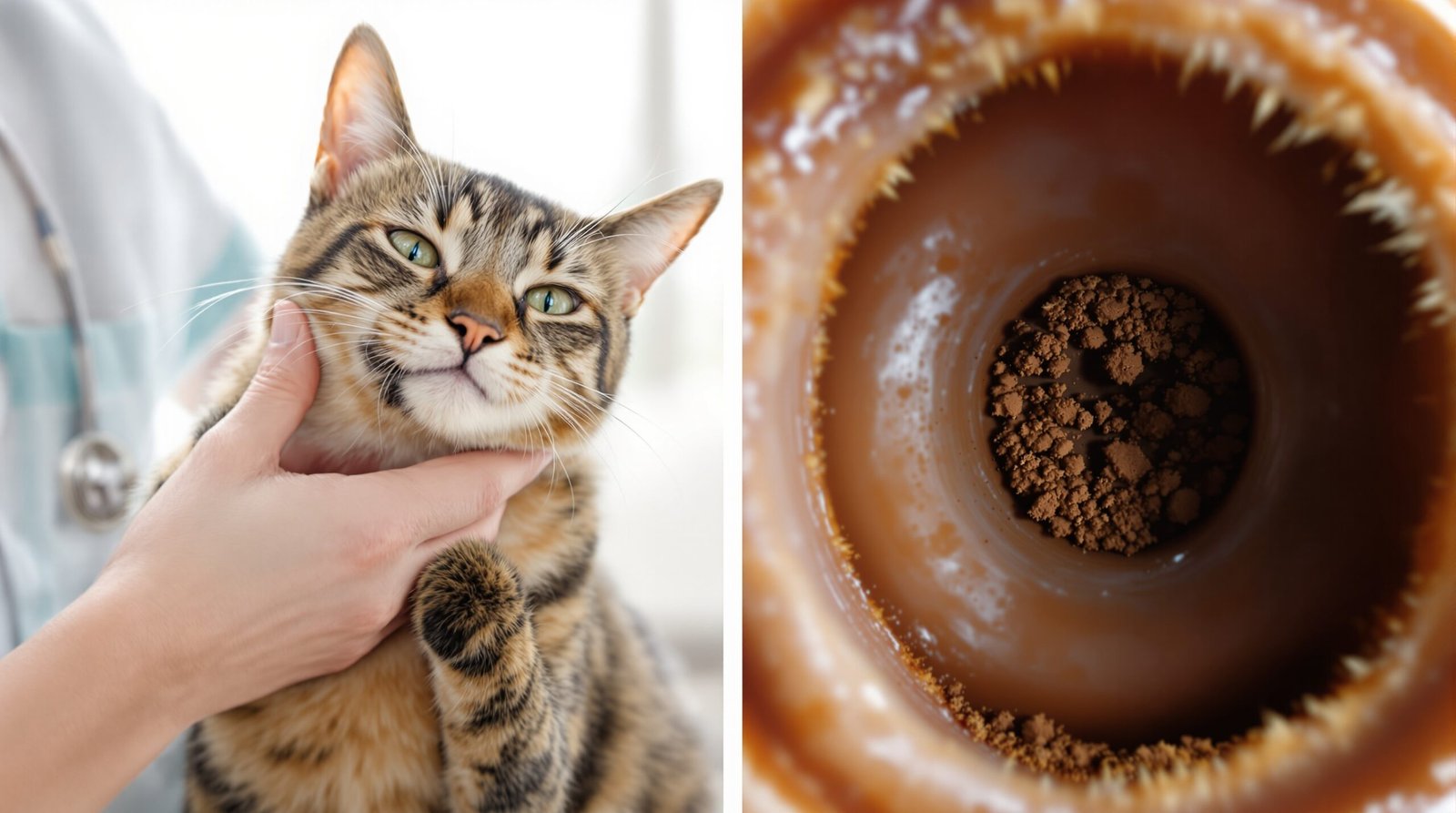
Cat Ear Mites: Complete Veterinary Guide to Symptoms, Treatment & Prevention (2025)
Last Updated: October 29, 2025 | Reading Time: 15 minutes | Veterinary Reviewed
Table of Contents
- What Are Ear Mites?
- Symptoms & How to Identify Them
- Ear Mites vs Other Ear Problems
- Causes & Risk Factors
- Diagnosis Process
- Treatment Options & Costs
- Home Care During Treatment
- Prevention Strategies
- Complications & Emergency Signs
- Frequently Asked Questions
What Are Cat Ear Mites? Understanding Otodectes Cynotis
Ear mites (Otodectes cynotis) are microscopic eight-legged parasites—roughly 0.3-0.5mm in size (about the size of a grain of salt)—that infest the warm, moist environment of your cat’s ear canal. These highly contagious parasites feed on ear wax, skin oils, and cellular debris, causing intense irritation and inflammation.
Quick Facts:
- Size: 0.3-0.5mm (barely visible to naked eye)
- Lifecycle: 21-28 days from egg to adult
- Egg Hatching: 4 days
- Contagion Rate: Extremely high through direct contact
- Host Range: Primarily cats, but can affect dogs, rabbits, ferrets
- Prevalence: 50-85% of feline ear infections are ear mite-related
⚠️ Potential Complications if Untreated:
- Secondary bacterial or yeast infections
- Ear drum rupture
- Permanent hearing loss
- Aural hematomas (blood-filled ear swellings requiring surgery)
- Chronic otitis externa
💡 Related: Learn more about common cat health issues and preventive care strategies.
How to Tell If Your Cat Has Ear Mites: Symptoms & Signs
Primary Symptoms
| Symptom | What to Look For | Severity Indicator |
|---|---|---|
| Head Shaking | Frequent, vigorous shaking; head tilt toward affected ear | Mild to Severe |
| Excessive Scratching | Constant pawing at ears, sometimes causing wounds | Moderate to Severe |
| Dark Discharge | Coffee-ground-like debris (black/dark brown) | Hallmark Sign |
| Ear Inflammation | Red, swollen ear flaps (pinnae) | Moderate |
| Foul Odor | Strong, unpleasant smell from ears | Often indicates secondary infection |
| Crusty Lesions | Scabs around ears and face from scratching | Severe |
| Hair Loss | Patchy baldness around ears | Severe |
The “Coffee Grounds” Diagnostic Sign
The most telltale sign: dark, crumbly discharge that resembles coffee grounds. This distinctive debris is a mixture of:
- Mite excrement (feces)
- Dried blood from feeding
- Excess ear wax production
- Dead skin cells and tissue
🔍 Home Check: Gently fold back your cat’s ear flap. If you see this distinctive dark debris and your cat shows discomfort, ear mites are highly likely.
⚠️ Important: While you may occasionally see tiny white moving dots (the mites themselves) with excellent lighting, professional veterinary diagnosis is essential—other conditions produce similar symptoms.
💡 Related: Understand more about cat skin problems that may accompany ear issues.
Ear Mites vs. Other Ear Problems: Critical Differences
Many cat owners confuse ear mites with bacterial or yeast infections. Here’s how to differentiate:
Comparison Table: Ear Conditions in Cats
| Feature | Ear Mites | Yeast Infection | Bacterial Infection |
|---|---|---|---|
| Discharge Color | Dark brown/black (“coffee grounds”) | Yellow-brown, greasy | Yellow-green, pus-like |
| Odor | Mild to moderate | Sweet, musty smell | Foul, putrid |
| Texture | Dry, crumbly | Sticky, waxy | Wet, mucus-like |
| Itching Level | Extreme (constant scratching) | Moderate to severe | Moderate |
| Contagion | Highly contagious to other pets | Not contagious | Not contagious |
| Primary Cause | Parasitic infestation | Malassezia fungal overgrowth | Bacterial overgrowth (often secondary) |
| Age Group | Common in kittens, outdoor cats | Any age, immune-compromised | Any age |
| Visible Mites | Sometimes (under magnification) | No | No |
| Treatment | Antiparasitic medication | Antifungal medication | Antibiotics |
Critical Note: Ear mites often lead to secondary yeast or bacterial infections, so you may see mixed symptoms. This is why veterinary diagnosis with microscopic examination (cytology) is crucial—treatment must address all pathogens present.
How Do Cats Get Ear Mites?
Transmission Methods
1. Direct Contact (Most Common – 80%+ of cases)
- Physical interaction with infected cats
- Grooming sessions with infested animals
- Mother-to-kitten transmission during nursing
- Multi-cat household spread
2. Shared Resources
- Bedding, blankets, sleeping areas
- Grooming tools (brushes, combs)
- Food/water bowls (less common, but possible)
3. Environmental Exposure
- Contact with stray or outdoor cats
- Shelters, catteries, boarding facilities
- Grooming salon exposure
- Veterinary clinic waiting rooms (rare with proper hygiene)
Off-Host Survival
Ear mites CAN survive in the environment temporarily:
- At 50°F (10°C): 15-17 days
- At 93°F (34°C): 5-6 days
- Average conditions: 4-21 days depending on temperature and humidity
- Survival is highest: In cool, humid environments (>75% humidity)
Good News: Unlike fleas, ear mites cannot complete their lifecycle off a host, so environmental infestation is temporary and less concerning.
High-Risk Cats
- Kittens: Significantly more susceptible than adults (weaker immune systems)
- Outdoor/Indoor-Outdoor Cats: Higher exposure risk
- Cats Not on Monthly Parasite Prevention: No protective barrier
- Shelter or Rescue Cats: Higher initial exposure rates
- Cats with Weakened Immune Systems: FIV, FeLV, or other conditions
- Multi-Cat Households: Rapid spread between housemates
Myth Buster: Indoor-only cats CAN get ear mites if:
- You bring a new infected pet home
- They have brief outdoor access (balconies, screened porches)
- You carry mites in on clothing/hands from handling infected animals (rare)
However, outdoor cats face significantly higher risk due to increased exposure.
💡 Related: Learn about comprehensive cat wellness and disease prevention strategies.
Veterinary Diagnosis: What to Expect
Diagnostic Process
Step 1: Physical Examination
- Otoscopic examination: Lighted scope to view deep into ear canal
- Visual inspection: Ear flaps checked for inflammation, lesions
- Behavioral assessment: Degree of scratching, head shaking observed
- General health check: Overall condition evaluation
Step 2: Ear Cytology (Microscopic Analysis)
Your vet will perform ear cytology to confirm diagnosis:
- Cotton swab sample collected from ear canal
- Sample mixed with mineral oil on glass slide
- Examined under microscope (40-100x magnification) to identify:
- Live mites (appear as moving white dots)
- Mite eggs (oval, white structures)
- Bacteria (if secondary infection present)
- Yeast organisms (Malassezia if present)
Step 3: Additional Tests (if needed)
- Culture and sensitivity testing: For resistant infections
- Skin scrapings: If facial lesions present
- Ear drum examination: To assess for rupture
- Blood work: If systemic involvement suspected
Cost Breakdown
| Service | Cost Range (US) | Cost Range (UK) |
|---|---|---|
| Initial exam | $50-100 | £40-80 |
| Ear cytology | $30-75 | £25-60 |
| In-clinic ear cleaning | $25-75 | £20-60 |
| TOTAL Diagnostic Visit | $100-250 | £85-200 |
Treatment Options & Costs: What Works in 2025
Prescription Treatments (Most Effective – 95%+ Success Rate)
Option 1: Topical Spot-On Treatments ⭐ RECOMMENDED
| Product | Active Ingredient | Doses Needed | Cost (US) | Cost (UK) | Effectiveness |
|---|---|---|---|---|---|
| Revolution Plus | Selamectin + sarolaner | 1 dose (repeat if needed) | $25-35/dose | £20-30/dose | 95%+ |
| Advantage Multi | Moxidectin + imidacloprid | 1-2 doses | $20-30/dose | £18-25/dose | 90%+ |
| Bravecto Plus | Fluralaner + moxidectin | 1 dose (lasts 12 weeks) | $60-75 | £50-65 | 95%+ |
Application: Applied to skin between shoulder blades (topical spot-on)
✅ Pros:
- Easy home application
- Treats multiple parasites simultaneously (fleas, ticks, heartworms)
- Prevents reinfestation with monthly use
- Single dose often sufficient for ear mites
❌ Cons:
- Requires prescription
- Full mite elimination takes 3-4 weeks (eggs must hatch and die)
- Cost higher than ear drops
Treatment Timeline:
- Day 1: Apply treatment
- Days 2-5: Adult mites die, symptoms start improving
- Week 2-3: Eggs hatch, newly emerged mites die
- Week 4: Recheck exam confirms elimination
Option 2: Ear Drops (Direct Treatment)
| Product | Type | Duration | Cost (US) | Cost (UK) |
|---|---|---|---|---|
| Milbemite Otic | Prescription milbemycin | Single vet application | $40-60 | £35-50 |
| Tresaderm | Thiabendazole + antibiotics + steroid | 7-14 days, twice daily | $30-50 | £25-45 |
| Ivermectin Drops | Prescription antiparasitic | 2-3 weeks, daily application | $15-25 | £12-20 |
Option 3: Injectable Treatments
- Ivermectin injections: 2-3 doses, 7-14 days apart
- Cost: $20-40 per injection (US), £18-35 (UK)
Over-the-Counter Options ⚠️ NOT RECOMMENDED
Why OTC Products Fail:
- Don’t kill mite eggs (require 3-4 week daily application)
- Incomplete coverage of ear canal
- No secondary infection treatment
- Lower success rate (60-70% vs. 95%+ for prescription)
- No parasite prevention benefits
Total Treatment Cost Estimates
| Service/Product | Cost Range (US) | Cost Range (UK) |
|---|---|---|
| Initial vet exam + cytology | $100-150 | £85-125 |
| Ear cleaning (in-clinic) | $25-75 | £20-60 |
| Prescription medication | $20-75 per dose | £18-65 per dose |
| Ear cleaner (at-home) | $10-20 | £8-15 |
| Follow-up exam (4 weeks) | $50-100 | £40-85 |
| Secondary infection treatment (if needed) | $30-100 | £25-85 |
| TOTAL (Uncomplicated Case) | $200-400 | £170-340 |
| TOTAL (With Complications) | $400-800 | £340-680 |
💰 Cost-Saving Tip: Many monthly flea/tick preventatives like Revolution Plus and Bravecto Plus include ear mite coverage, making them more economical long-term ($240-420/year) than treating active infestations multiple times.
Home Care During Treatment
Proper Ear Cleaning Protocol
Supplies Needed:
- Vet-approved ear cleaner (Epi-Otic, Zymox, Virbac)
- Cotton balls or gauze pads (NEVER Q-tips)
- Treats for positive reinforcement
- Towel for restraint if needed
- Partner to help hold cat (optional)
Step-by-Step Cleaning:
- Restrain gently: Wrap cat in towel (“purrito method”) if needed
- Fill ear canal: Squeeze cleaner into ear—don’t be stingy with volume
- Massage base: Massage ear base for 20-30 seconds (you’ll hear squishing sounds)
- Allow head shaking: Release cat to shake out loosened debris
- Wipe outer ear: Use cotton ball/gauze to remove visible discharge
- Reward immediately: Give treats and praise
- Repeat for other ear if both affected
Frequency:
- During treatment: Daily for first 1-2 weeks
- Maintenance: Weekly after recovery
⚠️ NEVER:
- Use Q-tips/cotton swabs (can push debris deeper, rupture eardrum)
- Use alcohol or hydrogen peroxide (too harsh, damages tissue)
- Clean if ear drum suspected to be ruptured (let vet handle)
- Insert anything into ear canal beyond entrance
💡 Related: Master other aspects of cat grooming for complete care.
Managing Scratching & Self-Trauma
Protective Measures:
- E-collar (Elizabethan collar/”cone”): Essential for severe scratchers
- Cost: $10-25 (US), £8-20 (UK)
- Duration: Wear until itching controlled (7-10 days typically)
- Soft Nail Caps (Soft Paws/Kitty Caps): Reduce damage from scratching
- Cost: $15-20 per application
- Lasts 4-6 weeks
- Regular Nail Trimming: Weekly during treatment period
- Anti-Itch Medication: Short-term steroids if severe
- Ask vet about prednisolone or dexamethasone
- Typically 3-7 days of treatment
Prevention Strategies: Stop Reinfestation
1. Monthly Parasite Prevention 🥇 MOST IMPORTANT
Best Preventatives with Ear Mite Coverage:
| Product | Coverage | Monthly Cost | Minimum Age |
|---|---|---|---|
| Revolution Plus | Fleas, ticks, ear mites, heartworms, roundworms, hookworms | $25-35 | 8 weeks |
| Bravecto Plus | Fleas, ticks, ear mites, heartworms, roundworms, hookworms | $60-75 (lasts 12 weeks) | 6 months |
| Advantage Multi | Fleas, ear mites, heartworms, roundworms, hookworms | $20-30 | 9 weeks |
Cost Comparison:
- Prevention: $240-420/year
- Treatment: $200-400 per infestation (can occur multiple times)
ROI: Prevention pays for itself after just 1-2 avoided infestations.
2. Environmental Management
If Infestation Occurs:
✅ DO:
- Treat ALL household pets simultaneously (even if asymptomatic)
- Wash bedding in hot water (130°F+) weekly for 3 weeks
- Vacuum thoroughly: Carpets, furniture, cat trees (discard vacuum bag)
- Quarantine new pets: 2-3 weeks with vet exam before introduction
✅ DON’T NEED TO:
- Professional extermination (mites don’t reproduce in environment)
- Treat entire house with pesticides
- Discard cat furniture or toys (washing is sufficient)
3. Regular Ear Inspections
Weekly Home Exam Routine (takes 30 seconds):
- Sniff test: Check for unusual odors
- Visual inspection: Look inside ear flap for discharge
- Behavior check: Note scratching frequency
- Redness assessment: Compare to baseline normal appearance
Annual Vet Exams: Include ear examination in routine wellness check
4. Lifestyle Modifications
Risk Reduction Strategies:
- Keep cats indoors only when possible (reduces exposure 80-90%)
- Limit contact with strays or unknown cats
- Screen new cats before introduction:
- Veterinary exam within 48 hours of adoption
- 2-week quarantine period in separate room
- Preventative treatment before mixing with resident cats
- Choose reputable boarding facilities: Ask about parasite screening protocols
- Maintain strong immune system: Quality nutrition, stress reduction, regular vet care
💡 Related: Explore the indoor vs outdoor cats debate for health and safety insights.
Complications & When to Seek Emergency Care
Potential Complications from Untreated Ear Mites
1. Aural Hematoma (Blood-Filled Ear Swelling)
- Cause: Violent head shaking ruptures blood vessels in ear flap
- Appearance: Large, fluid-filled swelling on ear pinna
- Treatment Required: Surgical drainage + sutures
- Cost: $400-2,000+ depending on severity and provider
- Timeline: Surgery typically performed within 24-48 hours
2. Ear Drum Rupture (Tympanic Membrane Perforation)
Cause: Severe inflammation or infection spreading to middle ear
Symptoms:
- Sudden improvement in itching (pressure released)
- Head tilt
- Balance problems
- Discharge changes character
Consequences:
- Potential permanent hearing loss
- Inner ear infection risk (requires intensive antibiotics)
- Balance/coordination issues
3. Chronic Otitis Externa (Permanent Ear Canal Changes)
Cause: Long-standing inflammation causes tissue changes
Result:
- Ear canal narrowing (stenosis)
- Calcification of cartilage
- Lifelong predisposition to ear infections
4. Secondary Systemic Infection (Rare but Serious)
Symptoms:
- High fever (rectal temp >103.5°F / 39.7°C)
- Lethargy, weakness
- Loss of appetite >24 hours
- Vomiting or neurological signs
🚨 EMERGENCY SIGNS – Seek Immediate Veterinary Care If:
- Head tilt with loss of balance or falling over (inner ear involvement)
- Circling in one direction repeatedly (vestibular disease)
- Ear flap sudden swelling (hematoma formation)
- Bloody discharge from ears (not just dark wax)
- Seizures or neurological symptoms (infection spread to brain—rare)
- Complete loss of appetite for 24+ hours
- Fever >103.5°F (39.7°C) rectal temperature
- Extreme lethargy or unresponsiveness
Frequently Asked Questions
Can humans get ear mites from cats?
Technically yes, but extremely rare.
While documented in medical literature, human cases are uncommon. If mites do jump to human skin, they typically cause temporary itchy bumps or mild dermatitis but cannot establish permanent infestation or complete their lifecycle in human ears.
Risk Factors for Human Transmission:
- Immunocompromised individuals (HIV/AIDS, chemotherapy patients)
- Prolonged close contact with heavily infested cats
- Co-sleeping with infected cats
What to Do: If you develop itchy rashes while treating your cat for ear mites, consult your physician. Simple antihistamines and topical creams usually resolve human symptoms within days once cat is treated.
What kills ear mites in cats instantly?
Nothing kills ear mites “instantly”—this is a myth.
While modern treatments like Revolution Plus or Bravecto Plus kill adult mites quickly after application, complete elimination takes 3-4 weeks. Here’s why:
The Lifecycle Problem:
- Day 1: Treatment applied, adult mites start dying
- Days 2-5: Symptoms begin improving (fewer live adults)
- Days 4-10: Eggs laid before treatment hatch into larvae
- Weeks 2-3: Newly hatched mites mature and are killed by ongoing medication
- Week 4: Recheck confirms all life stages eliminated
No medication kills mite eggs, so time is required for eggs to hatch and expose larvae to treatment.
Can indoor cats get ear mites?
Yes, indoor cats can get ear mites, though at significantly lower rates than outdoor cats.
How Indoor Cats Get Infected:
- New pet introduction: Infected cat or dog brought into home
- Brief outdoor access: Balconies, screened porches, windows
- Vet/groomer visits: Exposure in waiting rooms (rare with proper hygiene)
- Human transmission: You handle infected animal, then touch your cat (very rare)
- Previous infestation: Mites survived in environment 1-3 weeks
Risk Comparison: Outdoor cats are significantly more likely to contract ear mites due to increased exposure to infected animals.
Do I need to treat my house for ear mites?
Minimal environmental treatment needed—nothing like flea treatment protocols.
Why Light Treatment Suffices:
- Mites survive off-host only 4-21 days maximum
- Cannot reproduce in environment (need ear canal)
- Die quickly without host animal
- Most infestations resolve by treating all pets
Recommended Home Actions:
- ✅ Wash all pet bedding in hot water (130°F+)
- ✅ Vacuum carpets and furniture thoroughly
- ✅ Treat ALL household pets simultaneously
- ❌ NO need for professional extermination
- ❌ NO need for premise sprays or foggers
- ❌ NO need to discard pet items
Can ear mites kill a cat?
Death is extremely rare but theoretically possible in cases of severe neglect.
Fatal Scenarios (Very Rare):
- Severe secondary infection spreading to brain (meningitis/encephalitis)
- Complete ear canal blockage preventing treatment
- Self-trauma causing life-threatening blood loss (very rare)
- Malnutrition if cat too painful to eat for extended period
Reality: With proper treatment, the prognosis is excellent—the vast majority of cats make a full recovery with no lasting effects.
Mortality Rate: <0.1% with veterinary care, higher only in severe neglect situations
How long does ear mite treatment take?
Complete Timeline:
| Phase | Duration | What’s Happening |
|---|---|---|
| Symptom Relief | 2-5 days | Itching decreases, scratching reduces |
| Adult Mite Death | 7-10 days | Most visible mites eliminated |
| Complete Elimination | 3-4 weeks | All life stages killed (eggs, larvae, adults) |
| Follow-Up Exam | 4 weeks | Vet confirms no mites remain |
Important: Even though symptoms improve within days, complete the full treatment course to prevent recurrence.
Are cat ear mites the same as dog ear mites?
Yes—same species (Otodectes cynotis)
This means:
- Cats can give ear mites to dogs
- Dogs can give ear mites to cats
- Both species treated with same medications
- ALL pets in household must be treated simultaneously to prevent “ping-pong” reinfestation
Species Difference: Cats are more commonly affected (50-85% of ear infections) versus dogs (~50% of ear infections).
Can I use dog ear mite medication on my cat?
EXTREME CAUTION—Some dog products are FATAL to cats
TOXIC TO CATS (Found in many dog products):
- ❌ Permethrin (potentially fatal—causes tremors, seizures, death)
- ❌ High-dose pyrethrins (excessive doses toxic)
- ❌ Tea tree oil in concentrated form (liver damage)
Safe Cross-Species Options:
- ✅ Revolution (selamectin)—labeled for both
- ✅ Advantage Multi—separate cat formulation
- ✅ Ear cleaners without medications
Rule of Thumb: ALWAYS use cat-specific products or get explicit veterinary approval before using any dog medication on cats. Cats lack certain liver enzymes dogs have, making them vulnerable to toxicity.
What home remedies work for cat ear mites?
Honest Answer: No home remedy replaces prescription treatment.
However, some can provide supportive care alongside veterinary treatment:
Safe Adjuncts (WITH professional treatment):
- ✅ Mineral oil ear flushes: Daily application—smothers some mites but won’t eliminate infestation
- ✅ Apple cider vinegar diluted 1:1 with water: Mild antiseptic properties
- ✅ Vitamin E oil: Soothes irritated ear tissue
Ineffective or Harmful:
- ❌ Essential oils (tea tree, eucalyptus, etc.)—TOXIC to cats
- ❌ Garlic or garlic oil—TOXIC to cats (causes anemia)
- ❌ Hydrogen peroxide—too harsh, damages tissue
- ❌ Rubbing alcohol—burns, causes pain
Bottom Line: Home remedies alone will not cure ear mites. You need prescription antiparasitic medication for successful treatment.
How much does ear mite treatment cost?
Total treatment costs for uncomplicated cases:
- US: $200-400
- UK: £170-340
This includes: initial exam, cytology, ear cleaning, prescription medication, and follow-up visit.
Complicated cases with secondary infections:
- US: $400-800
- UK: £340-680
Monthly prevention costs:
- US: $20-35 per month
- UK: £18-30 per month
Prevention saves money compared to treating multiple infestations.
Key Takeaways: The Bottom Line
- Ear mites are extremely common, causing 50-85% of feline ear infections
- Professional diagnosis is essential—cytology differentiates from bacterial/yeast infections
- Modern prescription treatments are highly effective (95%+ cure rate)
- All household pets must be treated simultaneously to prevent reinfestation
- Monthly parasite prevention is the best defense (Revolution Plus, Bravecto Plus)
- Complete elimination takes 3-4 weeks despite rapid symptom improvement
- Untreated infestations risk permanent ear damage—don’t delay treatment
- Prevention costs less than treatment (£200-400/year vs. £170-340 per infestation)
Next Steps: Action Plan
If You Suspect Ear Mites:
- Schedule vet appointment within 2-3 days (sooner if cat severely affected)
- Photograph ear discharge for documentation
- List all household pets (all need treatment)
- Prepare questions about preventative options
- Follow treatment protocol completely—don’t stop when symptoms improve
- Attend follow-up appointment at 4 weeks to confirm elimination
Questions about your cat’s specific situation? Always consult your veterinarian—they can tailor treatment to your cat’s age, health status, and lifestyle needs.
Expert Review & References
Medical Accuracy Review: This article has been reviewed for veterinary accuracy using peer-reviewed sources including:
- Cornell University College of Veterinary Medicine – Feline Health Center
- Companion Animal Parasite Council (CAPC) Guidelines
- Journal of Veterinary Parasitology – Otodectes cynotis research
- Today’s Veterinary Practice – Ear Mite Treatment Protocols
- PetMD Veterinary Database
- VCA Animal Hospitals Clinical Guidelines
Primary Scientific References:
- Companion Animal Parasite Council. (2019). Otodectic Mite Guidelines. capcvet.org
- Cornell Feline Health Center. Ear Mites: Tiny Critters That Can Pose Major Threat. vet.cornell.edu
- Kleszynski, B., DVM. (2024). Ear Mites in Cats. PetMD. petmd.com
- Today’s Veterinary Practice. (2021). Ear Mites: Uncovering, Treating, and Preventing Infestations. todaysveterinarypractice.com
Continue Learning: Internal Resources
Explore more cat health and wellness topics:
- Cat Healthcare Category – Comprehensive health guides
- Cat Wellness Resources – Nutrition, exercise, mental health
- Cat Grooming Tips – Complete grooming guide
- Cat Skin Problems – Dermatology issues explained
- Indoor vs Outdoor Cats – Lifestyle choices for longevity
Share Your Experience: Have you successfully treated ear mites in your cat? Share your tips in the comments below to help other cat owners!
Last Updated: October 29, 2025 | Word Count: ~5,500 words | Reading Level: Grade 8-10 (accessible to general audience)
© 2025 CatLives.co.uk. All rights reserved. Providing expert cat care guidance since 2023.