
As a dedicated owner of a British Shorthair, you likely cherish the calm and affectionate nature of your feline companion. However, their stoic demeanor can sometimes mask health issues, such as ear infections, which may go unnoticed until they become severe.
This guide aims to educate you on the common British Shorthair ear infection signs, helping you to remain vigilant about your cat’s health and well-being.
Quick Summary: Keeping Your British Shorthair Healthy
-
Subtle Indicators: British Shorthairs may display subtle signs of ear infections, such as scratching and head shaking.
-
Grooming Importance: Regular grooming is crucial to reduce the risk of ear issues, though it’s often linked more to overall hygiene than just their dense coats.
-
Early Detection: Differentiating between normal ear dirt and signs of infection is essential for timely veterinary care.
-
Behavioral Monitoring: The breed’s calm temperament means owners should be proactive in monitoring behavioral changes that signal discomfort.
-
Weight Management: Obesity can impede a cat’s ability to reach their ears during self-grooming, increasing the risk of debris buildup.
Early Warning British Shorthair Ear Infection Signs to Watch For


Identifying British Shorthair ear infection signs can be challenging due to their famously calm and stoic nature. Unlike more vocal breeds, a “Brit” might suffer in silence. Common symptoms to look for include:
-
Pawing or Scratching: Persistent scratching at the ears or rubbing the head against furniture.
-
Head Shaking: Frequent, forceful shaking of the head.
-
Behavioral Shifts: Increased withdrawal, irritability, or hiding behavior when they are usually social.
-
Abnormal Posture: Holding the head at a slight tilt or pinning the ears back (“airplane ears”).
Owners should note that while their dense coat is a breed hallmark, ear infections (Otitis Externa) are more frequently caused by underlying issues like allergies or ear mites rather than the fur itself.
Essential Ear Care and Grooming for Plush-Coated Breeds
Given the plush fur of British Shorthairs, ear care is a vital part of your weekly routine. While their coat is low-maintenance compared to long-haired breeds, a regular grooming routine helps you spot abnormalities early.
-
Weekly Inspections: Check for redness or unusual discharge.
-
Gentle Cleaning: If you notice wax, use a vet-recommended ear cleaner. Moisten a cotton ball and wipe the outer ear only.
-
Avoid Cotton Swabs: Never insert Q-tips into the ear canal, as this can damage the eardrum or push debris deeper.
According to the American Veterinary Medical Association (AVMA), preventative care is the best way to avoid chronic infections that can lead to hearing loss.
When to Call the Vet: Differentiating Between Dirt and Infection
Knowing when to seek professional help is crucial. Not all debris in the ear is a cause for alarm, but certain British Shorthair ear infection signs require a medical diagnosis:
-
The Smell Test: A healthy ear should be odorless. A yeasty or foul odor is a major red flag.
-
Discharge Color: Minimal light-brown wax is normal. Black discharge resembling coffee grounds usually indicates ear mites, while yellow or green discharge suggests a bacterial or fungal infection.
-
Physical Inflammation: Redness, swelling, or heat around the ear flap.
If you notice these signs alongside skin irritation or excessive scratching, consult your veterinarian immediately.
The Impact of Breed Personality on Health Monitoring
The British Shorthair’s stoic personality can conceal pain. Because they are less likely to vocalize than other breeds, owners must become “behavioral detectives.” A cat that suddenly stops enjoying interactive play or becomes sensitive about being touched around the head may be experiencing ear pain.
Obesity and Its Role in Ear Health
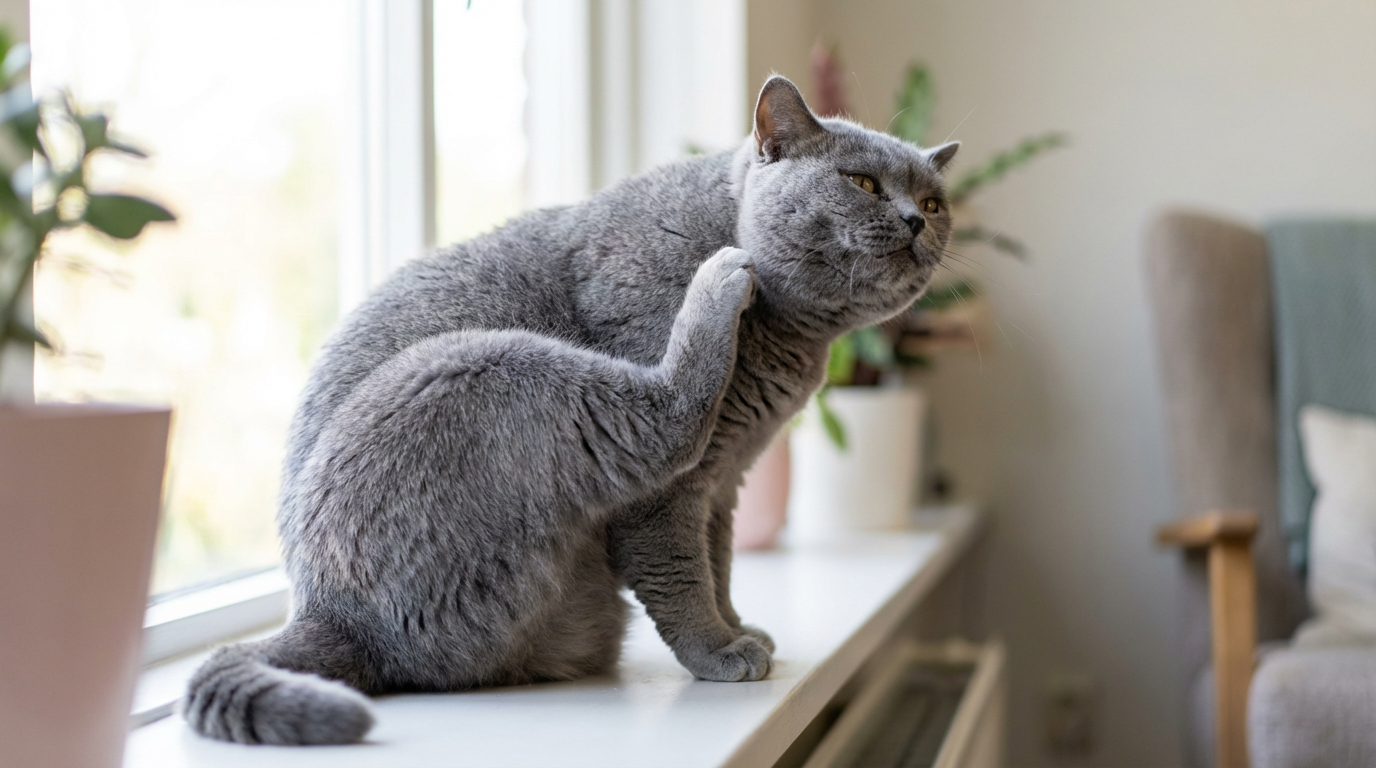
British Shorthairs are predisposed to weight gain due to their inactive nature. Current data from the Association for Pet Obesity Prevention (APOP) suggests that nearly 60% of domestic cats are overweight.
Obesity directly impacts ear health because it hinders a cat’s dexterity. An overweight cat cannot effectively use its hind legs to clean its ears or its paws to wipe its face. This lack of hygiene leads to a buildup of oils and wax, creating the perfect environment for bacteria to thrive. Monitoring your cat’s weight with a Cat BMI tool can help ensure they stay mobile and healthy.
Frequently Asked Questions (FAQs)
What are the early signs of an ear infection in British Shorthairs? Common early signs include scratching at the ears, shaking their head frequently, and changes in behavior such as increased hiding or irritability.
How can I clean my British Shorthair’s ears safely? Use a vet-recommended ear cleaner. Apply it to a cotton pad and gently wipe the visible part of the ear. Avoid the deep canal to prevent injury. For more on hygiene, see our cat ear cleaning guide.
Should I be concerned if my British Shorthair has ear wax? Minimal light wax is normal; however, if it’s excessive, dark, or accompanied by an odor, it is likely an infection or mites.
Are ear infections common in British Shorthairs? They are not more prone than other breeds, but their stoic nature and potential for obesity make them higher risk for undetected infections.
Conclusion: A Proactive Approach to Ear Health
Maintaining the health of your British Shorthair requires paying close attention to British Shorthair ear infection signs and overall lifestyle. Early detection is critical to effective treatment and prevents the infection from reaching the middle ear.
By establishing a weekly grooming habit, managing their weight, and monitoring their behavior, you can ensure your companion remains comfortable. Join the CatLives.co.uk community to stay informed on the latest feline wellness tips and share your experiences with fellow owners. Remember, a proactive approach is your best defense against health issues.