
When natural disasters or emergencies strike without warning, having comprehensive emergency evacuation plans with cats can mean the difference between chaos and safety. Your feline companions depend entirely on you during crises, making advance preparation absolutely essential. This detailed guide will help you create effective emergency evacuation plans with cats that protect your entire family—whiskers and all.
Why Emergency Evacuation Plans with Cats Are Critical
Many cat owners underestimate how challenging evacuations become when pets are involved. Unlike dogs, cats experience heightened anxiety during disruptions, making them more likely to hide, resist carriers, or bolt when frightened. Without proper emergency evacuation plans with cats, you risk:
- Wasting precious evacuation time searching for hiding cats
- Being forced to leave pets behind due to lack of preparation
- Facing shelter rejection because you arrived without proper supplies
- Experiencing separation from your cat during the most stressful moments
According to UK government emergency preparedness guidance, advance planning dramatically improves outcomes for families and their pets during crises.
Identifying Safe Evacuation Locations for Your Cat
The cornerstone of effective emergency evacuation plans with cats involves pre-identifying multiple safe destinations. Most emergency shelters do not accept pets due to health regulations, so you must arrange alternatives well in advance.
Pet-Friendly Accommodation Options
Hotels and Boarding Facilities: Research pet-friendly hotels within 50-100 miles of your home. Keep an updated list with phone numbers and booking policies. Many facilities waive pet fees during declared emergencies, but spaces fill quickly.
Family and Friends: Establish clear agreements with relatives or friends who can accommodate you and your cats. Ensure they understand this arrangement isn’t just theoretical—confirm their willingness annually.
Veterinary Boarding: Contact your local veterinarian about emergency boarding capacity. Some practices maintain crisis protocols for existing clients.
Animal Welfare Organizations: Organizations like the RSPCA and Blue Cross provide flood safety resources and may offer temporary accommodation during major disasters.
Building Your Cat Emergency Evacuation Kit
Professional emergency management experts now recommend maintaining 7-10 days of supplies—significantly more than previous three-day recommendations. Your emergency evacuation plans with cats should include a dedicated grab-and-go kit stored near your primary exit.
Essential Supplies Checklist
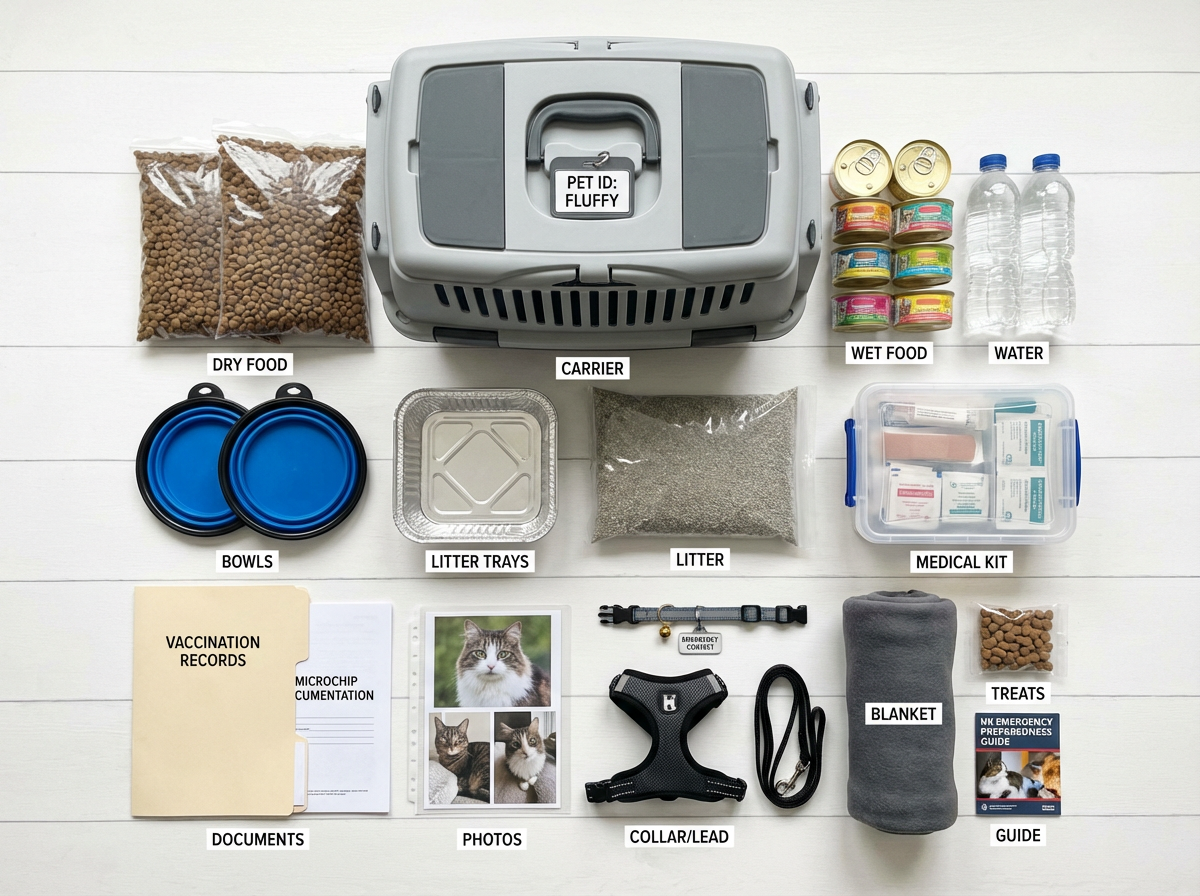
Food and Water (7-10 day supply):
- Sealed dry food or pop-top tinned food (rotate every 2-3 months)
- Bottled water (1 litre per day per cat)
- Collapsible food and water bowls
- Manual tin opener
Medical Necessities:
- Two-week supply of all medications in waterproof container
- Complete vaccination records and medical history
- Written list of any medication administration requirements
- Contact details for your veterinarian and nearest 24-hour emergency clinic
Containment and Transport:
- Sturdy carrier for each cat (clearly labelled with your contact information)
- Extra collar with updated ID tags including mobile number
- Secure harness and lead as backup
- Thick towels or blankets for comfort and security
Sanitation Supplies:
- Disposable litter trays (aluminium roasting pans work perfectly)
- Week’s supply of litter in sealed bags
- Waste bags and disinfectant
- Paper towels for cleanup
Identification Documentation:
- Recent photos of you with each cat (proves ownership if separated)
- Microchip registration numbers and contact details
- Photocopies of adoption or purchase papers
- USB drive with digital copies of all documents
For detailed guidance on assembling these supplies, refer to our comprehensive cat emergency kit guide.
Implementing Your Emergency Evacuation Plans with Cats
Having supplies means nothing without practiced execution. Your emergency evacuation plans with cats require regular rehearsal to become effective.
Communication Strategy
Ensure every household member understands:
- Which exit routes to use in different emergency scenarios
- Who’s responsible for securing each cat
- Where the emergency kit is stored
- Designated meeting points if family members become separated
- Emergency contact numbers (keep written copies—don’t rely on phone batteries)
Carrier Familiarization Training
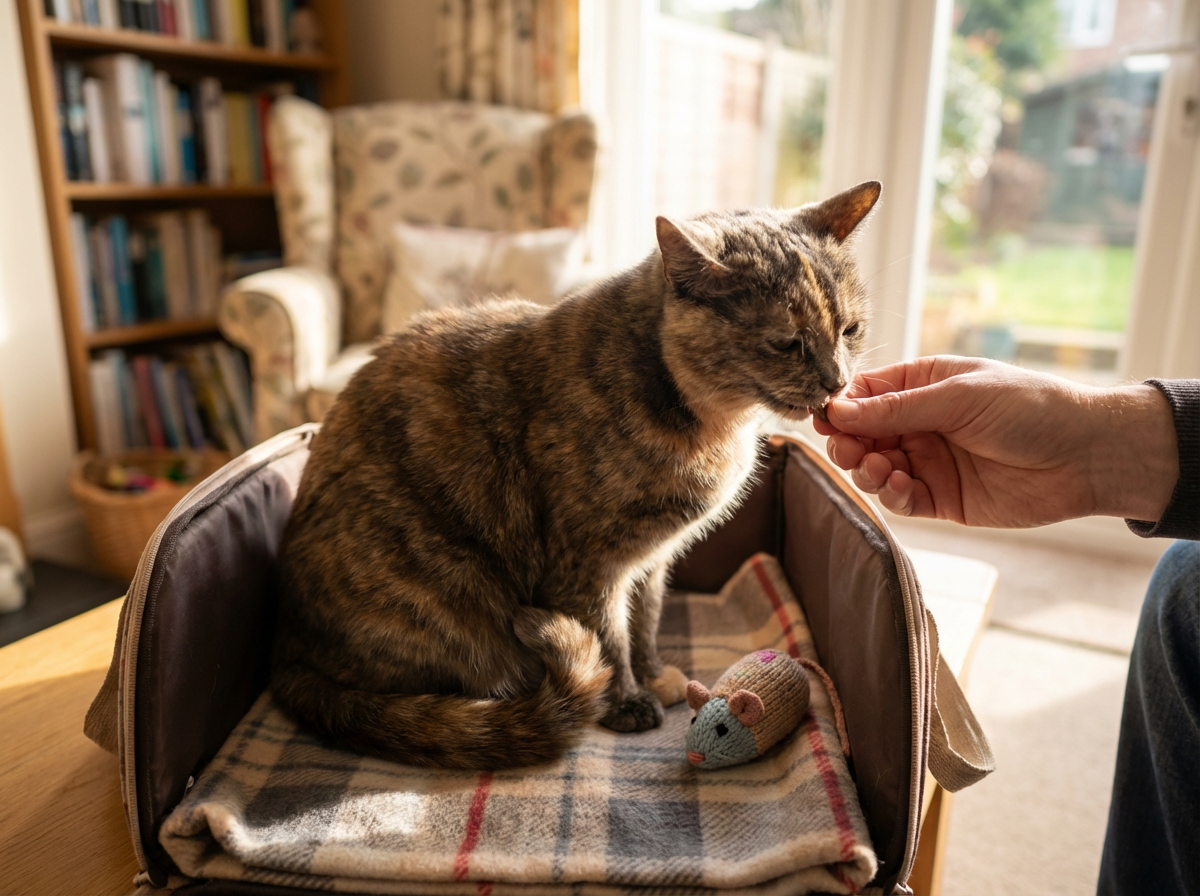
The American Red Cross emphasizes that cats accustomed to carriers evacuate 300% faster than unprepared cats. Start training immediately:
Week 1-2: Leave carriers open in favourite lounging areas with comfortable bedding inside. Spray with calming pheromones.
Week 3-4: Feed treats and meals near—then gradually inside—carriers. Make carriers positive spaces, never punishment.
Week 5+: Practice loading cats quickly, securing doors, and carrying them to your vehicle. Reward calm behaviour generously.
For cats resistant to carriers, consult our guide on medication administration techniques, which includes gentle restraint methods.
Regular Evacuation Drills
Conduct family drills quarterly:
- Announce the drill (eventually progress to surprise drills)
- Time how long securing all cats and supplies takes
- Load everything into your vehicle as you would during real evacuation
- Drive to your designated safe location to verify routes and timing
- Review what worked and what needs improvement
Document drill results and adjust your emergency evacuation plans with cats accordingly.
Recognizing and Managing Cat Stress During Emergencies
Even perfectly planned evacuations create anxiety for cats. Understanding feline stress signals helps you provide appropriate support.
Common Stress Behaviors
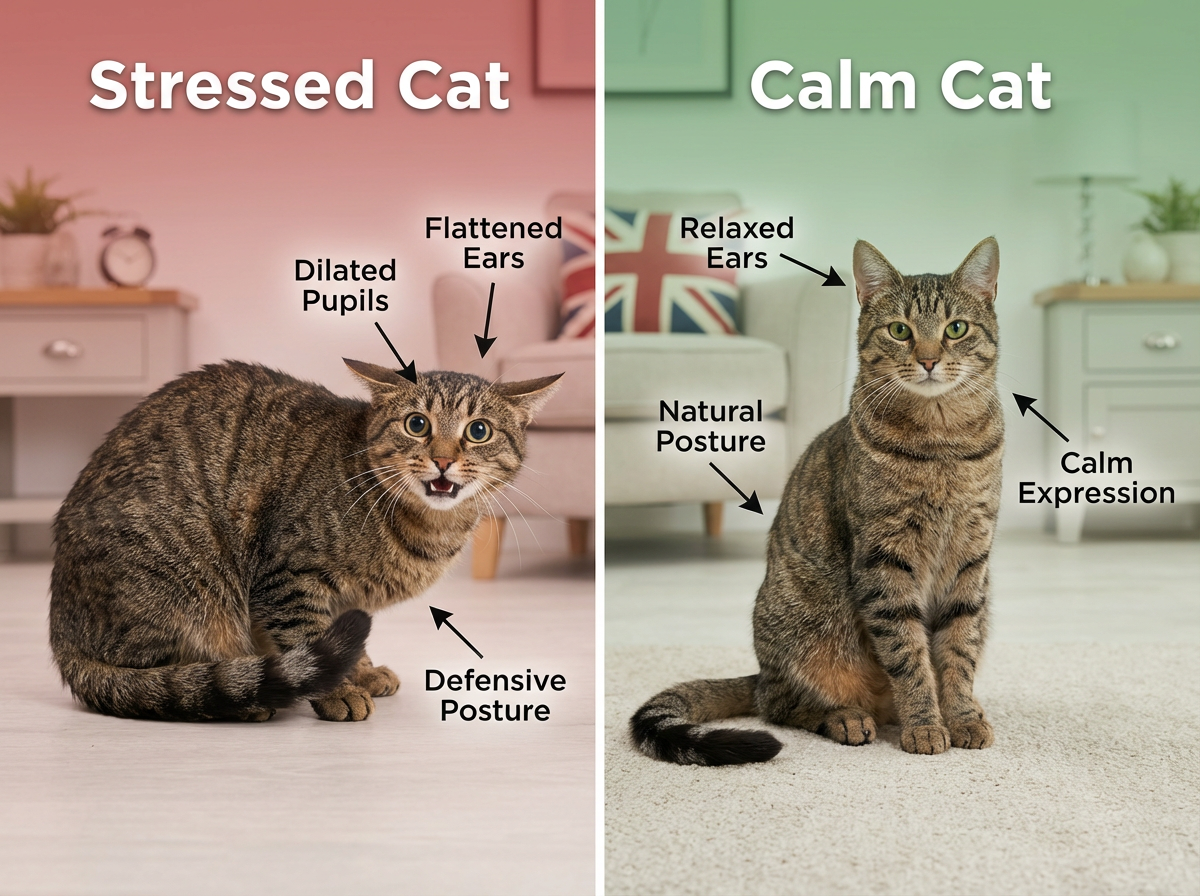
Hiding: Cats instinctively seek enclosed spaces when frightened. Rather than forcing them out (which increases panic), create portable safe spaces using carriers lined with familiar-smelling bedding.
Aggression: Fear-based aggression manifests through hissing, swatting, or biting. Use thick towels to handle frightened cats safely. Never punish aggressive behaviour during emergencies—fear drives these responses.
Excessive Vocalization: Increased meowing or yowling indicates distress. Speak in calm, reassuring tones. Avoid high-pitched or excited voices which may amplify anxiety.
Appetite Loss: Stress frequently suppresses appetite. Once relocated, offer highly palatable foods like plain cooked chicken or quality wet food to encourage eating.
Inappropriate Elimination: Litter box problems commonly emerge during stress. Provide familiar litter types and maintain clean boxes to minimize accidents.
Special Considerations for UK Cat Owners
Microchipping Requirements
Since 10 June 2024, microchipping is legally mandatory for all UK cats over 20 weeks old. This regulation makes emergency evacuation plans with cats significantly more effective, as microchipped cats reunite with owners 20 times more often than non-chipped cats.
Verify your microchip details are current:
- Update contact information after moving house
- Include an emergency contact who lives outside your immediate area
- Confirm your chip is registered on national databases
Geographic Risk Assessment
The UK faces specific emergency scenarios requiring tailored emergency evacuation plans with cats:
Flooding: Britain’s most common natural disaster. If you live in flood-risk areas, practice vertical evacuation to upper floors and maintain supplies upstairs.
Severe Weather: High winds, storms, and snow can necessitate rapid evacuation. Monitor Met Office warnings and evacuate early when cats are calmer.
Urban Emergencies: For city dwellers, building fires pose significant risks. Identify multiple exit routes and place rescue alert stickers on doors noting the number of cats inside.
Post-Emergency Recovery for Cats
Once immediate danger passes, your emergency evacuation plans with cats must address recovery and reintegration.
Health Assessment
Schedule veterinary examinations within 48 hours of returning home. Stress-related health issues including upper respiratory infections and digestive upset commonly emerge days after evacuations.
Look for:
- Changes in appetite or water consumption
- Vomiting or diarrhea
- Lethargy or unusual sleeping patterns
- Signs of pain or discomfort
Establishing Routine
Cats crave predictability. Restore normal routines as quickly as possible:
Feeding schedules: Return to regular meal times using familiar foods Play sessions: Resume age-appropriate activities to rebuild confidence Sleep locations: Re-establish favorite sleeping spots with unwashed bedding carrying familiar scents
Environmental Reintegration
If your home sustained damage, introduce cats gradually:
- Confine to one safe room initially with all essential resources
- Allow supervised exploration of additional areas over several days
- Provide vertical territory via cat trees and shelves to rebuild security
- Monitor territorial behavior especially in multi-cat households
Frequently Asked Questions About Emergency Evacuation Plans with Cats
How often should I update my emergency evacuation plans with cats?
Review and update plans every six months, or immediately after major life changes (moving house, acquiring new cats, changing veterinarians). Quarterly drills keep skills sharp and supplies rotated.
What if I can’t find my cat during an evacuation?
If official evacuation orders are issued, never risk your life searching for hiding cats. Leave carrier doors open with familiar bedding and food inside. Post clear rescue alert stickers indicating cats remain inside. Contact local animal rescue services with your cat’s microchip number once safe.
Can cats sense disasters before they happen?
Cats detect subtle environmental changes—barometric pressure drops, ultrasonic tremors, unusual wildlife behavior—potentially hours before human awareness. If your normally calm cat displays unusual anxiety or hiding, take it seriously and review weather warnings.
Should I tranquilize my cat for evacuation?
Never administer sedatives without explicit veterinary guidance. Tranquilized cats cannot regulate body temperature properly, may experience breathing difficulties in carriers, and become harder to monitor for medical issues. Focus instead on gradual carrier desensitization and calming pheromone products.
What about indoor vs outdoor cats during evacuations?
Outdoor cats pose unique challenges as they may resist containment. Begin transitioning outdoor cats to accept indoor confinement well before emergencies occur. Practice supervised outdoor access using harnesses to maintain their sense of freedom while ensuring you can secure them quickly.
How do I handle multiple cats with different personalities?
Develop individualized approaches for each cat. Confident cats may load easily with treats, while anxious cats need gradual socialization to carriers. Consider individual carriers to prevent stress-induced aggression between cats during transport.
Taking Action Today
Effective emergency evacuation plans with cats aren’t created overnight—they require systematic preparation, training, and regular maintenance. Start today by:
- Researching three potential evacuation destinations and confirming their pet policies
- Ordering rescue alert stickers for doors and windows
- Assembling your 10-day emergency supply kit
- Scheduling your first practice drill within the next fortnight
- Verifying microchip registration accuracy
Your cats cannot prepare themselves. Only your diligence ensures their safety when disasters strike. By implementing these emergency evacuation plans with cats, you transform from reactive panic to confident, protective action.
Additional Resources
For comprehensive UK emergency planning guidance, visit GOV.UK’s emergency preparedness page.
The ASPCA’s disaster preparedness guide offers detailed checklists and printable resources for American and international audiences.
For UK-specific pet emergency planning, download guidance from local resilience forums which coordinate regional disaster responses.
Remember: the best emergency evacuation plans with cats are the ones practiced before they’re needed. Your preparation today becomes your cat’s lifeline tomorrow.