Owners of British Shorthairs will often describe their feline companions as dignified, calm, and loving. Yet, this beloved breed’s stoic demeanor can mask a serious concern: dental disease. While many cat owners might overlook subtle signs of discomfort, recognising British Shorthair dental disease symptoms is vital for preventing long-term health issues that can affect the heart, kidneys, and liver.
In this comprehensive guide, we will explore the nuances of feline oral health, specifically tailored to the British Shorthair (BSH). We will help you identify dental disease symptoms, understand the genetic predispositions of the breed, and provide proactive care strategies for a longer, healthier life.
The Silent Epidemic: Why Dental Health Matters
According to the American Veterinary Dental College (AVDC), dental disease is the most common clinical condition in adult cats. Statistics suggest that up to 70-80% of cats show signs of periodontal disease by the age of three. For the British Shorthair, these numbers can be even more concerning due to their specific facial anatomy.
Unlike humans, cats do not typically get “cavities.” Instead, they suffer from two primary issues: Periodontal Disease (infection of the tissues surrounding the teeth) and Feline Tooth Resorption (where the body begins to reabsorb the tooth structure). Both conditions are incredibly painful but often go unnoticed by owners because cats are biologically programmed to hide pain to avoid appearing vulnerable to predators.
Early Warning Signs: Recognising British Shorthair Dental Disease Symptoms
Identifying British Shorthair dental disease symptoms early is the difference between a simple professional cleaning and a complex surgical extraction. Because BSH cats are “low energy” and calm, you cannot rely on them crying out in pain. You must be an “oral detective.”
1. Halitosis (Bad Breath)
While no cat has minty breath, a strong, foul, or “rotting” odor is a red flag. This smell is produced by volatile sulfur compounds created by bacteria living in the plaque and tartar on your cat’s teeth.
2. Changes in Eating Habits
If your cat suddenly prefers wet food over dry, or if they drop kibble while eating, they are likely experiencing oral sensitivity. You may notice them tilting their head to one side to chew on the “less painful” side of their mouth. This is a critical stage in recognising British Shorthair dental disease symptoms.
3. Gingivitis and Visual Indicators
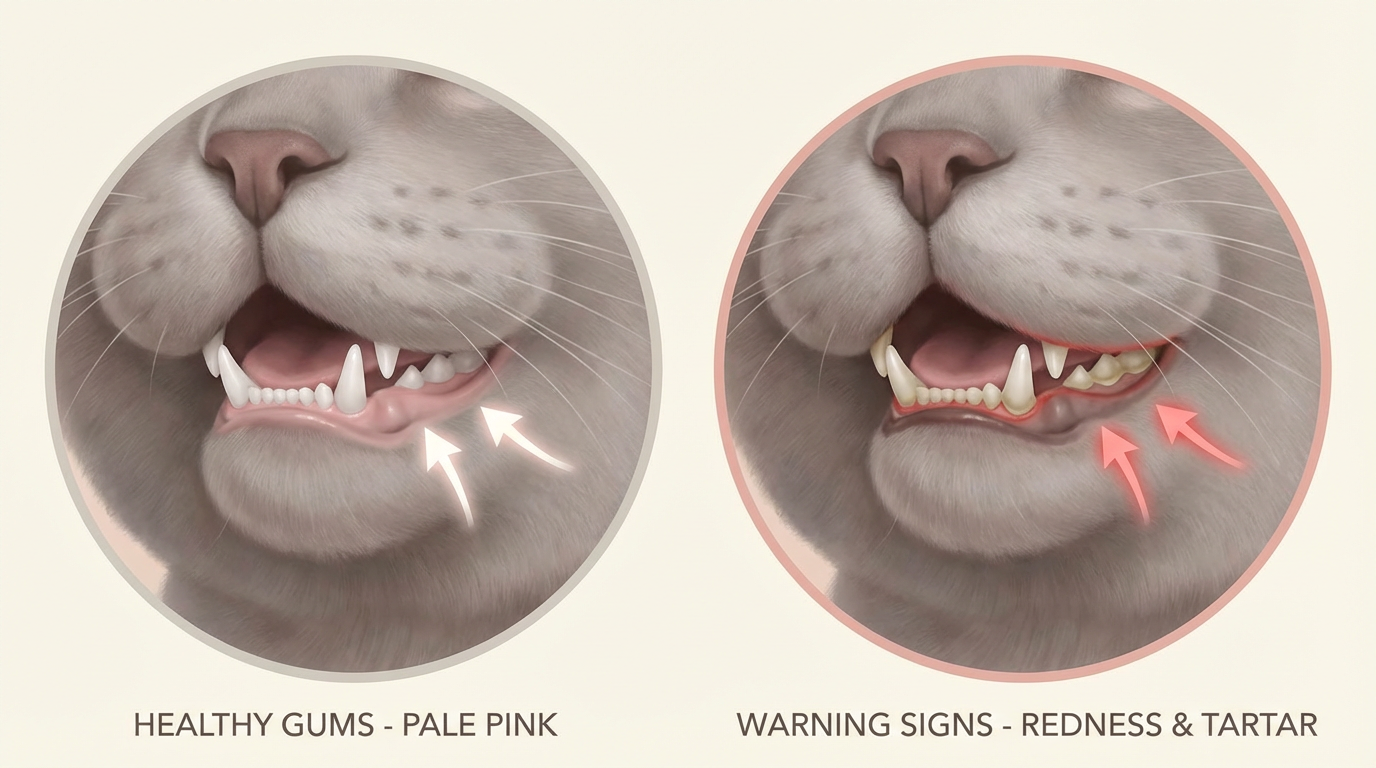
Lift your cat’s lips gently. Healthy gums should be a pale pink. If you see a thin red line where the tooth meets the gum, this is the earliest stage of gingivitis. Advanced symptoms include:
-
Tartar (Calculus): Hard, brown or yellow crusts on the tooth surface.
-
Receding Gums: The gumline pulling away, exposing the tooth root.
-
Bleeding: Blood on chew toys or in the water bowl.
4. Behavioral Shifts
A cat in pain often becomes “grumpy” or withdrawn. If your BSH, usually a fan of head scratches, suddenly shies away when you touch their face, oral pain is a likely culprit. This lack of grooming is a common behavioral indicator across many breeds.
Breed Tendencies: The Brachycephalic Connection
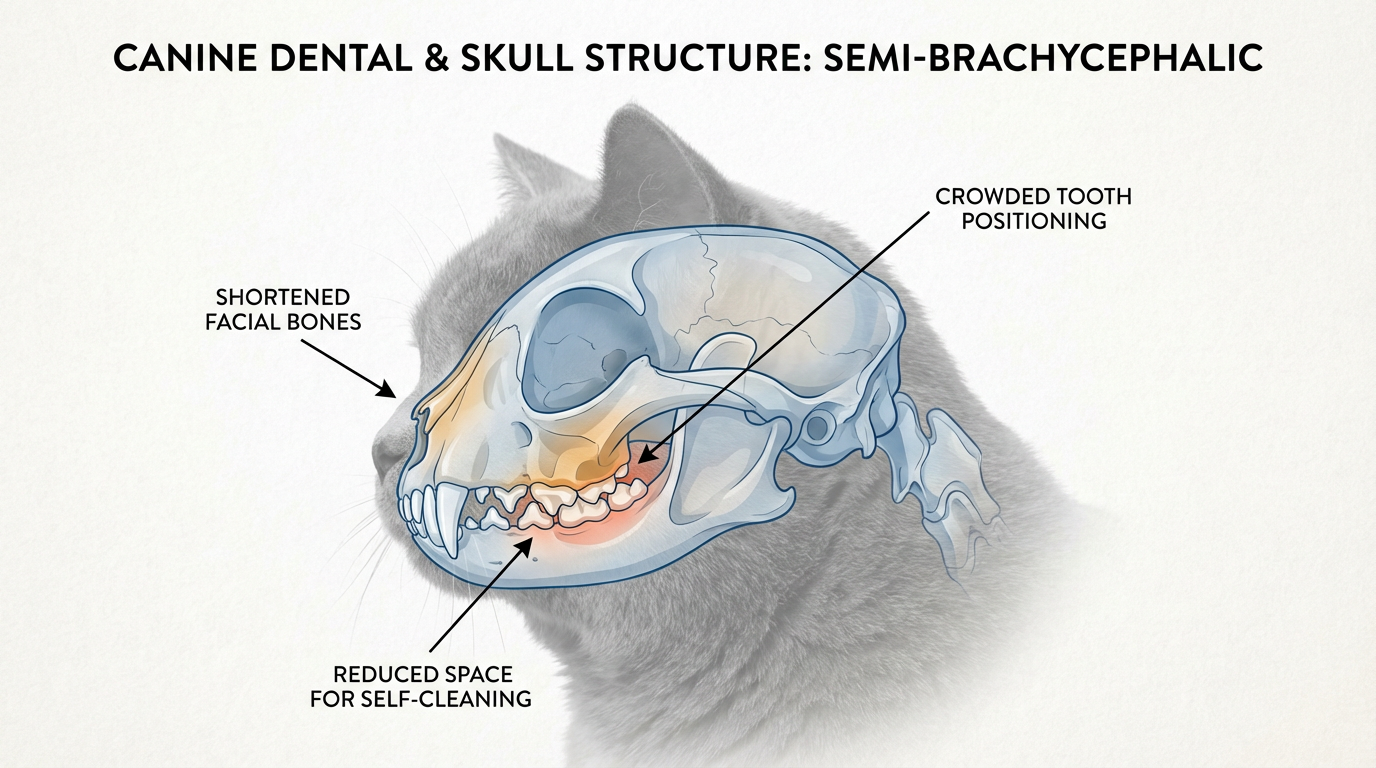
British Shorthairs are classified as semi-brachycephalic. Their short, broad faces and round heads are what make them so adorable, but this skeletal structure creates a “crowding” effect in the mouth.
When teeth are crowded together, there is less space for the natural self-cleaning action of saliva. Food particles and bacteria become trapped in tight gaps, leading to rapid plaque mineralization. This anatomical reality makes recognising British Shorthair dental disease symptoms a more frequent necessity for BSH owners than for owners of “pointed” or long-faced breeds.
Furthermore, BSH cats are prone to Feline Resorptive Lesions. These are essentially “holes” that develop in the teeth at or below the gumline. Research from the Cornell Feline Health Center suggests that these lesions are intensely painful, yet cats will continue to eat, masking the severity of the decay until the tooth root is completely destroyed.
Obesity and the Inflammatory Cycle
The British Shorthair is a “cobby” breed, meaning they have a naturally stocky and muscular build. However, this often leads to obesity if their diet isn’t strictly managed.
There is a direct physiological link between obesity and dental disease:
-
Systemic Inflammation: Fat tissue (adipose tissue) produces pro-inflammatory cytokines. This puts the cat’s body in a constant state of inflammation, which worsens the immune system’s overreaction to oral bacteria.
-
Decreased Activity: Overweight cats are less likely to engage in active play or “gnawing” on toys that provide mechanical cleaning for the teeth.
-
Dietary Choices: Many owners of overweight cats switch to soft, high-calorie foods that stick to the teeth more readily than a structured healthy diet.
Professional vs Home Dental Care: A Two-Pronged Approach
Managing dental health requires more than just the occasional treat. It requires a synergy between your veterinarian and your daily routine.
The Role of the Veterinarian
Even with perfect brushing, cats need professional care. A “COHAT” (Comprehensive Oral Health Assessment and Treatment) involves:
-
General Anaesthesia: It is impossible to safely clean under the gumline of a conscious cat.
-
Dental X-rays: Since 60% of a cat’s tooth is hidden below the gumline, X-rays are the only way to find resorptive lesions or root abscesses.
-
Scaling and Polishing: Removing the “biofilm” that allows bacteria to stick to the teeth.
Home Care Strategies
-
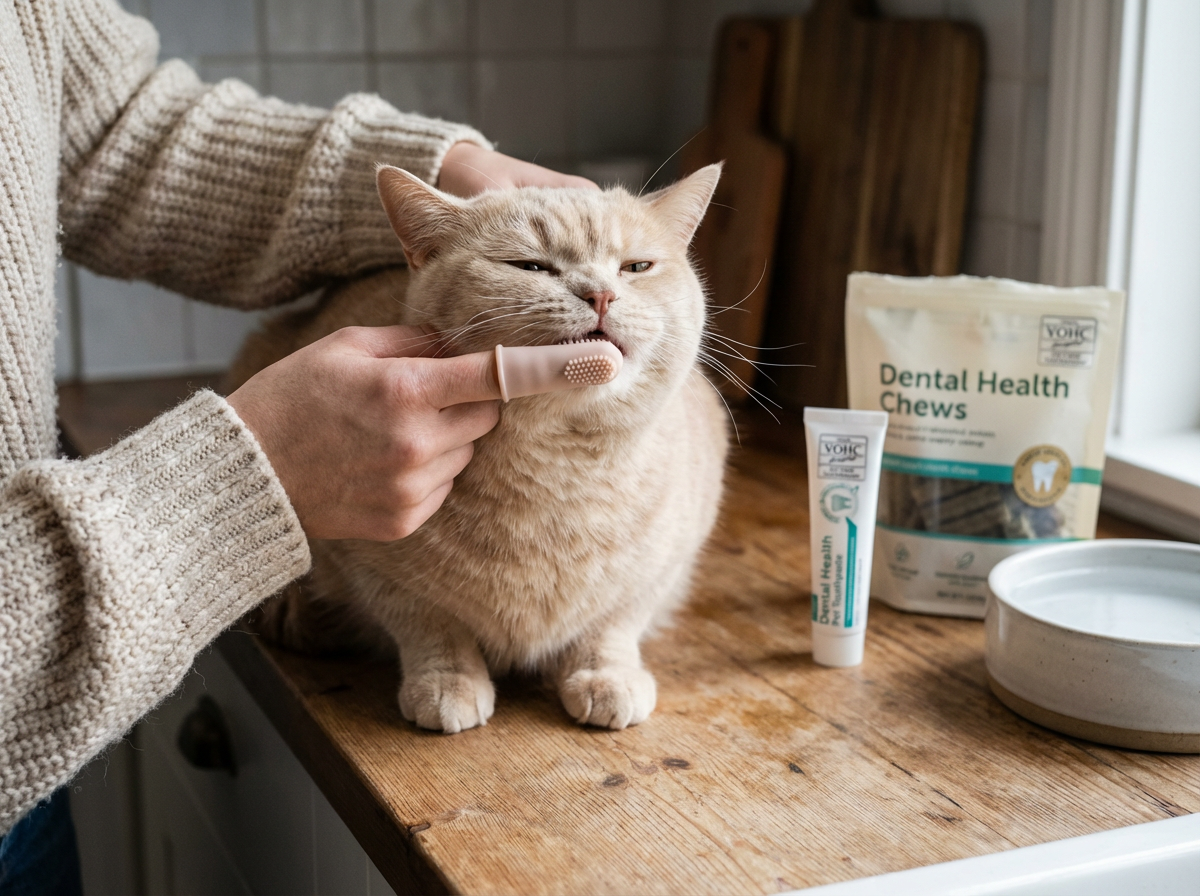
Daily Brushing: Use a soft-bristled finger brush. You can find guides on introducing this habit to older cats at CatLives.co.uk.

-
VOHC-Approved Diets: The Veterinary Oral Health Council certifies products that are clinically proven to reduce plaque. These kibbles are larger and designed to scrub the tooth as the cat bites down.
-
Water Additives: These contain enzymes that break down the bacterial matrix in the mouth.
Dangerous Advice to Avoid Regarding Dental Care
As you research how to help your pet, you will encounter “old wives’ tales” that can be detrimental to your British Shorthair’s health.
-
“Dry food cleans teeth automatically”: Most standard kibble is too small; cats swallow it whole or it shatters instantly. Without specific “Dental” formulations, dry food offers little benefit.
-
“Anesthesia-free dental cleaning is safer”: This is a cosmetic procedure only. It does not address the bacteria under the gumline and can actually cause micro-scratches on the enamel that allow more plaque to grow.
-
“Use human toothpaste”: Many human toothpastes contain Xylitol, which is highly toxic to cats and can cause liver failure or seizures.
Comparing Care Across Breeds
While we focus on the BSH, it is helpful to note that other large breeds have similar requirements. For instance, the nutritional needs of a BSH are often compared to the Maine Coon, where high-protein, controlled-calorie diets are essential to prevent the weight gain that fuels dental inflammation.
| Breed | Face Shape | Primary Dental Risk |
| British Shorthair | Semi-Brachycephalic | Crowding & Resorptive Lesions |
| Maine Coon | Sub-Mesaticephalic | Juvenile Gingivitis |
| Siamese | Dolichocephalic | Periodontitis |
FAQs
How often should I take my British Shorthair for dental check-ups?
Ideally, once a year. If you are already recognising British Shorthair dental disease symptoms such as heavy tartar or red gums, your vet may recommend a check-up every six months.
Is dental surgery dangerous for older British Shorthairs?
While any anesthesia carries a small risk, modern veterinary medicine uses advanced monitoring and pre-anesthetic bloodwork to ensure safety. The risk of chronic infection from dental disease spreading to the heart is often much higher than the risk of the procedure itself.
Can I use coconut oil to clean my cat’s teeth?
While coconut oil has mild antimicrobial properties, it is not a substitute for the mechanical action of brushing or the enzymatic action of veterinary-grade toothpaste.
Conclusion
Maintaining the health of your British Shorthair requires a commitment to vigilance. By recognising British Shorthair dental disease symptoms early—from subtle bad breath to changes in appetite—you can spare your feline friend from chronic pain and expensive surgeries.
Remember, a healthy mouth is the gateway to a healthy body. Whether you are managing their dietary intake or scheduling their annual vet visit, your proactive steps today ensure a happier, more “dignified” tomorrow for your BSH.
For more breed-specific guides and community support, visit the CatLives.co.uk sitemap to explore our latest articles on feline wellness and behavior.