
Creating a Cat Emergency Kit: Essential UK Guide for 2025
Disasters and emergencies strike without warning—from floods and fires to sudden health crises. As a responsible UK cat owner, creating a cat emergency kit is one of the most crucial preparations you can make to protect your feline companion. A well-stocked emergency kit ensures your cat remains safe, comfortable, and properly cared for during the most stressful situations. This comprehensive guide will walk you through everything you need to know about creating a cat emergency kit that could save your pet’s life.
Why Creating a Cat Emergency Kit Is Essential
Understanding the importance of creating a cat emergency kit begins with acknowledging that emergencies are inherently unpredictable. Whether facing natural disasters, house fires, sudden evacuations, or unexpected veterinary emergencies, having supplies ready can mean the difference between chaos and calm.
Cats are particularly vulnerable during emergencies because they experience heightened stress and anxiety in unfamiliar situations. Research shows that understanding cat anxiety and preparing adequately can significantly reduce trauma for both you and your pet. By creating a cat emergency kit, you demonstrate your commitment to your cat’s wellbeing while ensuring you’re prepared for any crisis.
Creating a Cat Emergency Kit: Complete Checklist
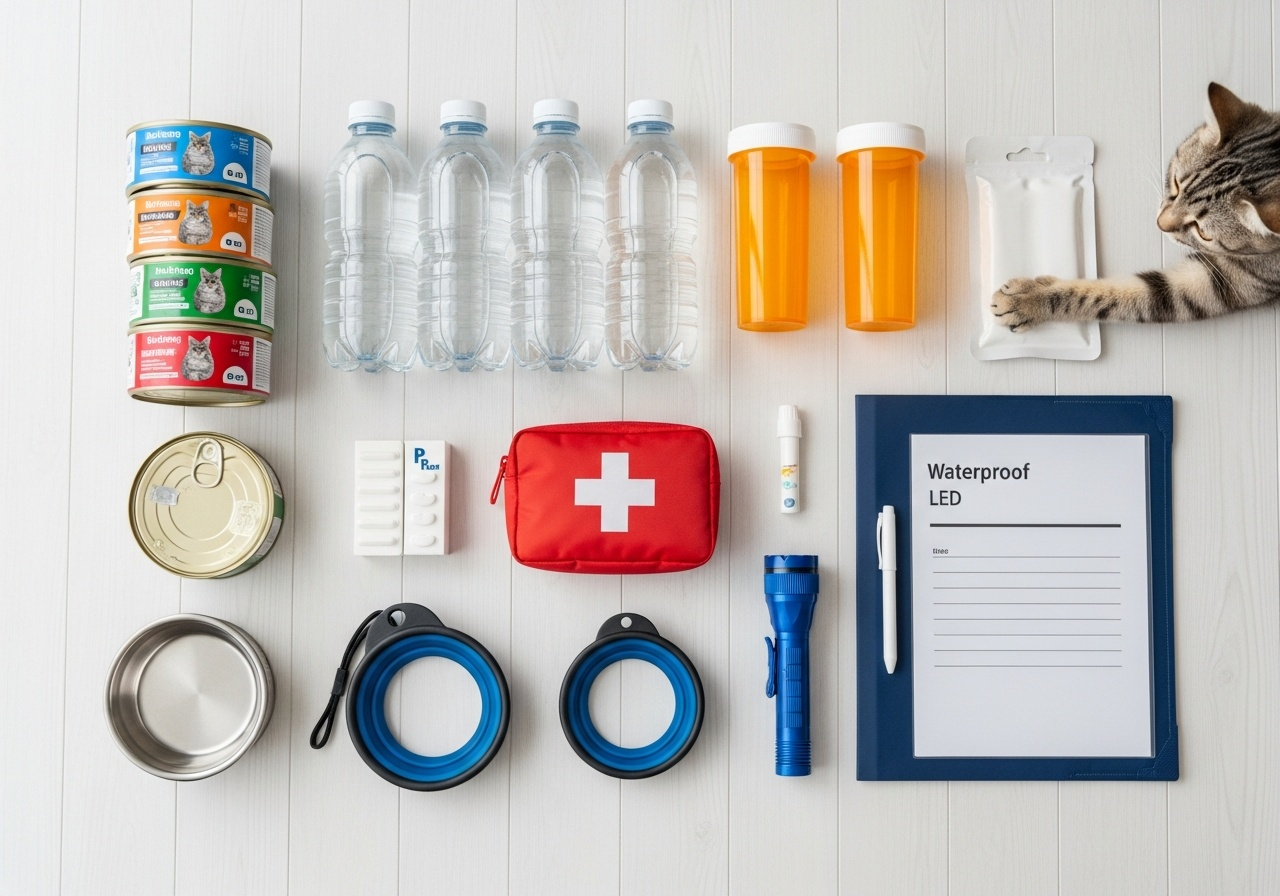
When creating a cat emergency kit, you’ll need two types of kits to cover different emergency scenarios:
Kit Type 1: Shelter-in-Place Kit
A comprehensive kit for staying home during extended emergencies (power outages, severe weather)
Kit Type 2: Grab-and-Go Evacuation Kit
A lightweight, portable kit for rapid evacuations requiring immediate departure
Here’s your complete checklist for creating a cat emergency kit:
Food and Water Supplies
Current best practice recommends a 2-week supply rather than the previously suggested one week (CDC guidelines):
- Food: 14 days of your cat’s regular food in sealed, waterproof containers
- Water: Calculate based on your cat’s weight (1 ounce per pound per day)
- Example: An 8-pound cat needs 8 oz (1 cup) daily = 14 cups for two weeks
- An 11-pound cat needs 11 oz daily = approximately 20 cups for two weeks
- Manual can opener: If storing canned food
- Bowls: Collapsible or lightweight food and water bowls
- Measuring cup: For accurate portion control
Understanding your cat’s nutritional needs helps ensure you stock appropriate food for emergencies.
Medical Supplies and Records
Store these items in a waterproof bag or container:
- Medications: 2-week supply of all prescribed medications
- Medical records: Vaccination certificates, chronic condition documentation
- Veterinary contact information: Your regular vet and emergency clinic numbers
- Microchip details: Registration number and company contact (learn about microchipping)
- Recent photos: Pictures of you WITH your cat (proves ownership if separated)
- Pet insurance documents: If applicable
Having chosen the right veterinarian means you’ll have trusted professional support during emergencies.
First Aid Essentials
Your cat’s first aid kit should include:
- Antiseptic wipes or solution
- Sterile gauze pads and bandages
- Medical tape
- Digital thermometer (rectal thermometers for pets)
- Tweezers for removing splinters or ticks
- Scissors (blunt-ended)
- Disposable gloves
- Hydrogen peroxide (consult vet before inducing vomiting)
- Saline solution for eye/wound cleaning
- Emergency blanket
- Pet-specific first aid guide
Critical: Never administer human medications without veterinary authorization—many are toxic to cats.
Sanitation Supplies
- Portable litter box: Collapsible or disposable options
- Litter: 2-week supply (sealed bag)
- Litter scoop: Lightweight version
- Waste bags: For disposal
- Cleaning supplies: Paper towels, disinfectant wipes
- Enzymatic cleaner: For accidents outside the litter box
Maintaining proper litter box hygiene remains important even during emergencies.
Comfort and Security Items
Reducing stress is crucial when helping anxious cats:
- Familiar bedding: Your cat’s favourite blanket or bed
- Favourite toys: Small comfort items with familiar scents
- Pheromone spray: Feliway or similar calming products
- Treats: Small quantities of favourite treats for positive reinforcement
Identification and Transportation
- Sturdy cat carrier: Well-ventilated, secure, comfortable (carrier training tips below)
- Collar with ID tag: Current contact information
- Spare collar and lead: In case primary items are damaged
- Microchip verification: Ensure registration details are current
Practical Equipment
- Flashlight: LED torch with extra batteries
- Battery-powered or hand-crank radio: For emergency broadcasts
- Phone charging cables: Including portable power bank
- Duct tape: Multiple emergency uses
- Permanent marker: For labeling containers
- Plastic bags: Various sizes for storage and waste
Emergency Contacts List
Keep both physical and digital copies:
- Your regular veterinary surgery
- 24-hour emergency vet clinic
- Local animal shelters
- Pet-friendly accommodation options
- Friends/family who can help with pet care
- Pet poison helpline numbers
How to Assemble Your Cat Emergency Kit: Step-by-Step
Creating a cat emergency kit doesn’t have to be overwhelming. Follow these organized steps:
Step 1: Choose Appropriate Containers
Select two different containers:
- Shelter-in-Place Kit: Large, waterproof plastic storage bin with secure lid (stored at home)
- Grab-and-Go Kit: Sturdy backpack or wheeled carrier (easy to transport quickly)
Step 2: Gather All Supplies
Create a shopping list from the checklist above. Inventory what you already have and purchase missing items. Consider buying duplicates of everyday items rather than removing them from regular use.
Step 3: Organize Strategically
Pack items in logical groups:
- Medical supplies in labeled waterproof bags
- Food in sealed containers with rotation dates marked
- Important documents in waterproof folder
- Small items in clear zip-lock bags for visibility
- Heavy items at bottom of containers
Step 4: Label Everything Clearly
Use permanent markers or label makers to identify:
- Contents of sealed containers
- Expiration dates on food and medications
- Instructions for administering medications
- Your contact information on the kit exterior
Step 5: Store Accessibility
Place your kits where you can access them quickly:
- Shelter-in-place kit: Easily accessible storage area
- Grab-and-go kit: Near primary exit route
- Ensure all household members know the location
Creating a Cat Emergency Kit Maintenance Schedule
Creating a cat emergency kit is not a one-time task—regular maintenance ensures readiness:
Every 3-6 Months: Complete Kit Review
Set calendar reminders to:
- Check expiration dates on food, water, and medications
- Rotate food supplies to maintain freshness (Pet Health Love recommendation)
- Replace expired items immediately
- Update medical records with recent vaccinations
- Verify contact information remains current
- Test batteries in flashlights and radios
- Refresh water supply if using tap water in bottles
Annually: Comprehensive Assessment
Once per year, conduct a thorough evaluation:
- Review your cat’s current needs (age, health changes)
- Update medication types/dosages
- Replace worn carriers or damaged equipment
- Refresh comfort items if needed
- Update photographs (especially for growing kittens)
- Reassess your evacuation plan
After Any Changes
Update your kit immediately when:
- Your cat starts new medications
- You move house (moving with cats guide)
- Contact information changes
- Your cat develops new health conditions
- Family circumstances change
Carrier Training: Essential Emergency Preparedness
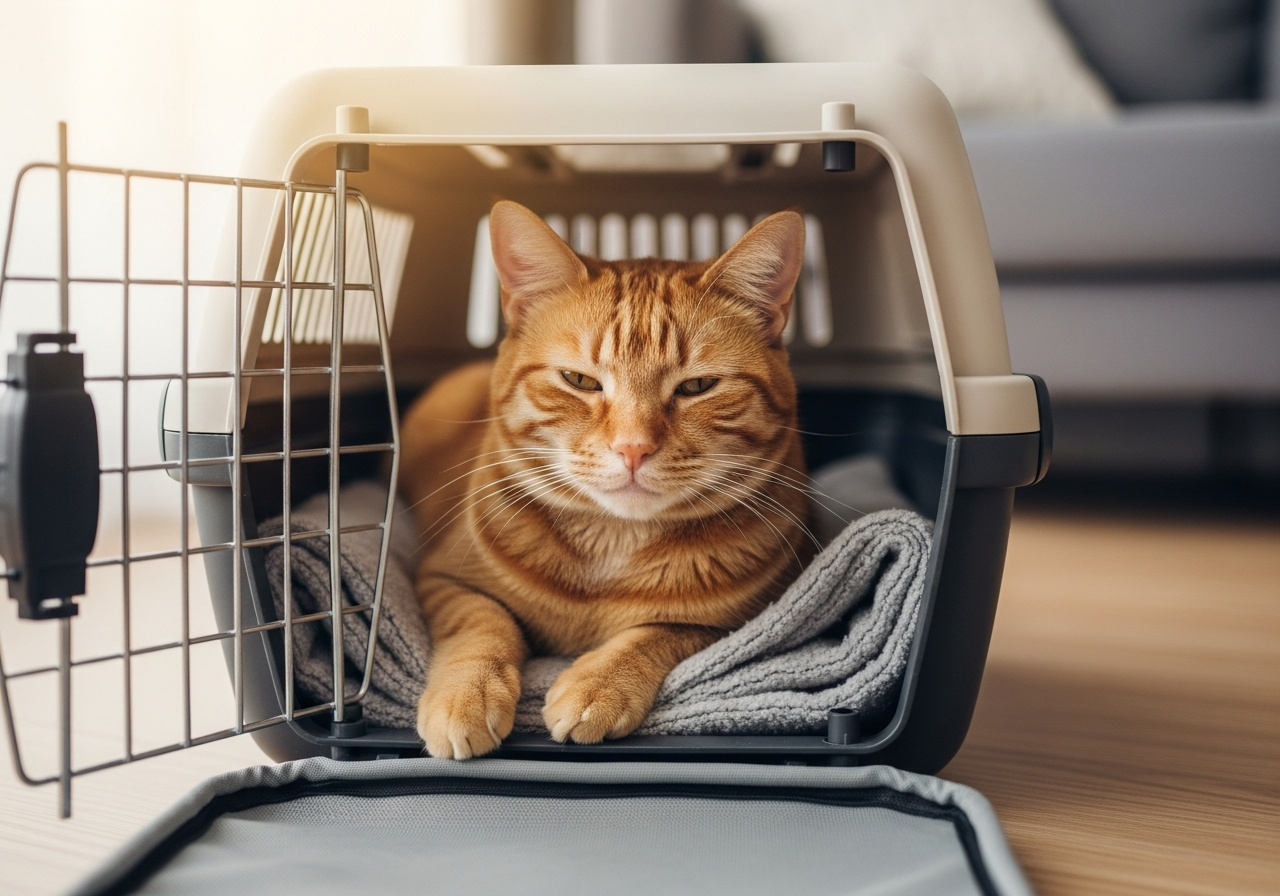
When creating a cat emergency kit, carrier training is just as important as the supplies themselves. A cat comfortable with their carrier experiences significantly less stress during evacuations.
Start Carrier Acclimation Early
Begin training well before any emergency:
-
Week 1-2: Introduction
- Leave carrier out with door open in main living area
- Place soft bedding inside
- Allow cat to explore voluntarily
- Never force entry
-
Week 3-4: Positive Association
- Place treats just inside carrier entrance
- Feed meals near or inside carrier
- Gradually move food deeper inside
- Add favourite toys inside
-
Week 5-6: Voluntary Entry
- Reward with treats when cat enters
- Use verbal praise
- Play with toys near carrier opening
- Create positive experiences
-
Week 7-8: Door Closure Practice
- Close door briefly while cat inside
- Immediately reward with high-value treats
- Gradually extend door-closed duration
- Open if cat shows stress
-
Week 9-10: Movement Practice
- Lift carrier briefly while cat inside
- Walk short distances around house
- Maintain calm, reassuring voice
- Increase duration gradually
Veterinary Partner guidance confirms this gradual approach reduces transport-related stress significantly.
Emergency Procedure Practice: Beyond Creating a Cat Emergency Kit
Creating a cat emergency kit provides the tools, but practicing procedures ensures effective use during actual emergencies.
Conduct Regular Emergency Drills
Monthly practice sessions help both you and your cat:
-
Evacuation Simulation
- Practice retrieving your cat quickly
- Place cat in carrier calmly
- Grab emergency kit
- Move to designated safe area
- Time yourself to identify improvements
-
Shelter-in-Place Practice
- Set up safe room with emergency supplies
- Keep cat confined comfortably
- Practice using emergency equipment
- Maintain calm environment
-
Varied Scenarios
- Practice during different times of day
- Simulate various emergency types
- Include all household members
- Identify challenges and solutions
Create an Evacuation Plan
Your plan should include:
- Primary and secondary exit routes
- Designated meeting point for family members
- Pet-friendly accommodation options researched in advance
- Alternative care arrangements if you’re injured
- Transportation backup plans if primary vehicle unavailable
Critical: Most emergency shelters don’t accept pets. Research and pre-arrange pet-friendly options:
- Pet-friendly hotels within 50-mile radius
- Friends/family willing to temporarily house your cat
- Boarding facilities that accept emergency placements
- Rescue organizations offering emergency fostering
Multiple Cat Households: Multiplying Your Preparedness
If you have multiple cats, creating a cat emergency kit requires additional planning:
Individual Carriers Required
Each cat needs their own carrier—never attempt to transport multiple cats in one carrier during emergencies. Stress levels are too high for sharing confined spaces.
Multiply All Supplies
Calculate supplies for each cat:
- Food: 14 days × number of cats
- Water: (1 oz per pound × weight) × 14 days × number of cats
- Medications: Individual prescriptions × 14 days
- Litter: Increase quantity for multiple users
Identification for Each Cat
Ensure every cat has:
- Individual collar with ID tag
- Separate microchip registration
- Individual photos with owner
- Distinct medical records
Practice With All Cats
Emergency drills should include getting all cats into carriers simultaneously—recruit help if needed.
Special Considerations When Creating a Cat Emergency Kit
Kittens and Senior Cats
Adjust supplies for age-specific needs:
- Kittens: Smaller portions, kitten-specific food, extra warmth sources
- Senior cats: Arthritis management supplies, mobility aids, additional medications
Cats with Chronic Conditions
For cats with ongoing health issues:
- Extended medication supplies (discuss with vet)
- Specialized food (prescription diets)
- Medical equipment (insulin, syringes, etc.)
- Detailed care instructions for emergency caregivers
Indoor vs. Outdoor Cats
Outdoor cats may need:
- Backup containment plans if confined during emergencies
- Additional identification due to roaming habits
- Stronger carriers to prevent escape
Frequently Asked Questions About Creating a Cat Emergency Kit
Q: How much does creating a cat emergency kit cost? A: Initial setup ranges from £50-£150 depending on what you already own. Building gradually over weeks/months makes costs manageable.
Q: Can I use my cat’s regular carrier for emergencies? A: Yes, if it’s sturdy, secure, and your cat is comfortable with it. Ensure it’s well-maintained and kept accessible.
Q: What if my cat has special dietary needs? A: Stock their specific prescription or specialty food. Consult your veterinarian about emergency alternatives if their regular food becomes unavailable.
Q: Should I include treats in my emergency kit? A: Yes, small quantities of favourite treats help with stress management and can encourage eating during high-anxiety situations.
Q: How do I keep water fresh for 2 weeks? A: Use commercially bottled water with distant expiration dates. Rotate supplies every 6 months. Alternatively, use water treatment tablets.
Q: What if I can’t afford everything at once? A: Build your kit gradually, prioritizing: carrier, 3-day food/water, medications, then expanding to 2-week supplies over time.
Q: Where should I evacuate with my cat in an emergency? A: Research pet-friendly hotels, identify friends/family willing to help, and know boarding facility locations. Never leave your cat behind.
Q: How do I transport my emergency kit and cat simultaneously? A: Use a wheeled carrier or backpack-style emergency kit. Practice carrying both during drills to ensure manageability.
Conclusion: Creating a Cat Emergency Kit Saves Lives
Creating a cat emergency kit represents far more than assembling supplies—it’s a comprehensive commitment to your cat’s safety and wellbeing during the most challenging circumstances. By following this guide, you’ve taken the essential steps to protect your feline companion from the unpredictable nature of emergencies.
Remember these key principles:
✓ Two kits: Maintain both shelter-in-place and grab-and-go options
✓ 2-week supplies: Follow current CDC recommendations for extended emergencies
✓ Regular maintenance: Review and update every 3-6 months
✓ Carrier training: Start early, practice consistently
✓ Emergency drills: Practice makes perfect—don’t wait for real emergencies
✓ Evacuation planning: Research pet-friendly options before crisis strikes
Your preparedness directly impacts your cat’s survival and stress levels during disasters. While we hope you never face a genuine emergency, creating a cat emergency kit ensures you’re ready if the unexpected occurs.
For additional guidance on keeping your cats safe and healthy, explore our comprehensive resources on choosing a veterinarian, recognizing pain in cats, and preventing common household poisoning.
Don’t delay—start creating a cat emergency kit today. Your cat’s life may depend on the preparations you make right now.