Creating a Cat-Friendly Garden: The Complete 2025 Safety & Enrichment Guide
Meta Description: Discover how to create a cat-friendly garden with safe plants, secure enclosures, and enrichment features. Learn which plants are toxic to cats and how to design the perfect outdoor space for your feline friend.
Creating a cat-friendly garden is one of the most rewarding investments you can make in your feline companion’s cat wellbeing. Whether you’re designing an outdoor space for an energetic kitten or a senior cat seeking gentle stimulation, a well-planned garden offers enrichment, exercise, and safety. But here’s the reality: without careful planning, gardens can pose serious risks to cats—from toxic plants to unsecured boundaries.
This comprehensive guide cuts through the fluff to deliver evidence-based advice on creating a genuinely safe and engaging outdoor space for your cat, helping you understand the crucial balance between indoor vs outdoor living.
Why Your Cat Needs a Dedicated Garden Space
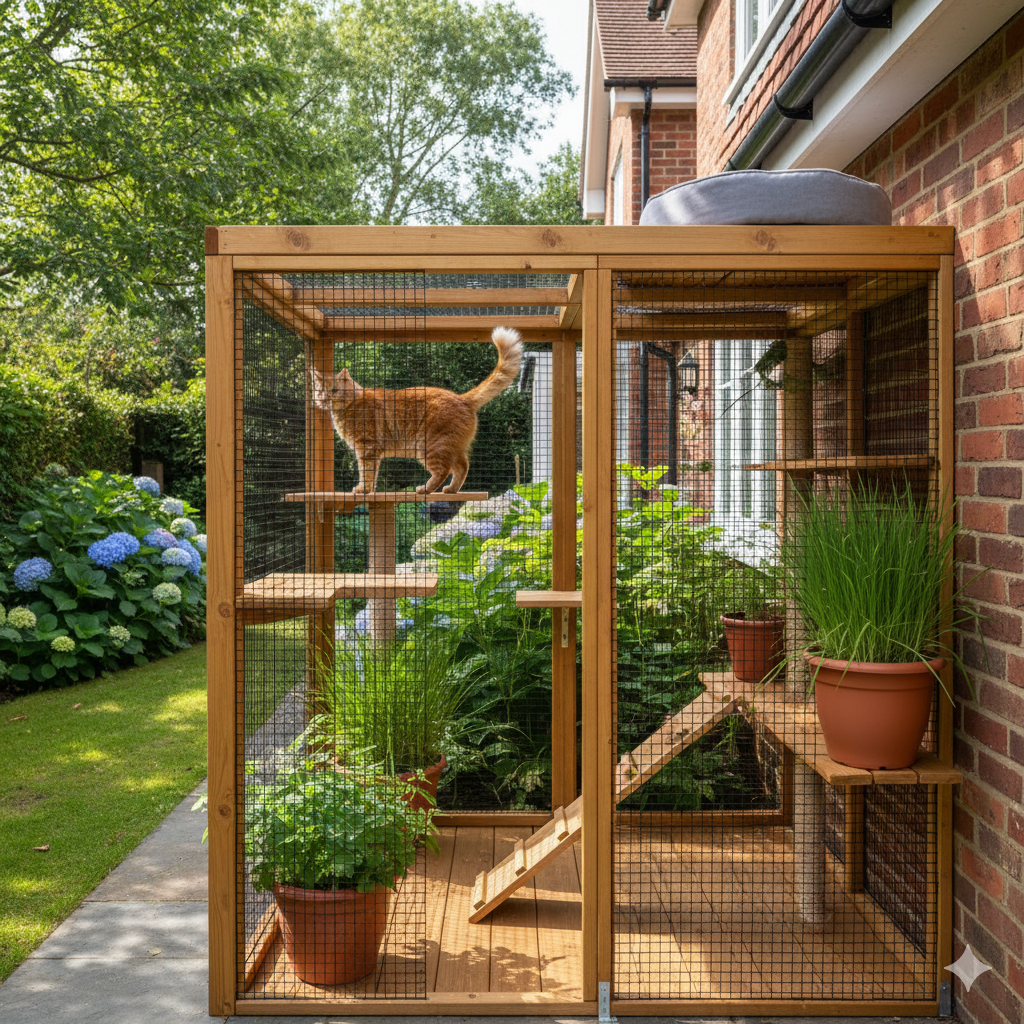
Let’s be straight: indoor cats live longer, healthier lives than free-roaming outdoor cats. The data on this is unambiguous. But that doesn’t mean cats don’t benefit from outdoor access—they just need it on the right terms.
A properly designed cat garden delivers multiple benefits backed by veterinary research. The outdoor environment provides ever-changing stimuli—moving shadows, rustling leaves, bird sounds, and varied scents. This sensory complexity prevents boredom and reduces stress-related behaviours. Learn more about enhancing your cat’s mental stimulation through environmental enrichment.
Obesity affects over 60% of domestic cats. A cat garden encourages natural behaviours like climbing, jumping, and exploration, helping maintain healthy weight. Combined with proper cat nutrition, outdoor access supports overall health. Cats are hardwired for stalking, climbing, scratching, and territorial surveying—a cat-friendly garden allows these instincts to manifest safely, much like the benefits outlined in our guide to reducing cat stress and anxiety.
Plant Selection: Where Most Guides Get It Dangerously Wrong
This is where most “cat-friendly garden” articles become dangerously misleading. Let’s set the record straight on which plants are genuinely safe and which pose real risks.
Truly Safe Plant Options for Your Cat Garden
Catnip (Nepeta cataria) is the gold standard for cat gardens. Contains nepetalactone, which triggers a euphoric response in approximately 70% of cats. Completely safe, non-addictive, and easy to grow in most UK climates. Learn everything about growing and using catnip plants for your cat.
Cat Grass (Wheatgrass, Oat Grass, Barley Grass) isn’t just safe—it’s actively beneficial. Provides fibre, aids digestion, and satisfies cats’ instinctual need to consume vegetation. Vomiting after eating cat grass is normal and helps expel hairballs—a common concern for many cat owners.
True Bamboo (Bambusoideae family) – Real bamboo species are safe for cats. However—and this is critical—”Lucky Bamboo” (Dracaena sanderiana) is NOT bamboo and is toxic to cats. This common houseplant causes vomiting (sometimes with blood), dilated pupils, drooling, weakness, and abdominal pain. If you’re buying bamboo for your garden, verify it’s genuine bamboo, not the Dracaena species commonly sold as “lucky bamboo.”
Spider Plants (Chlorophytum comosum) – Technically non-toxic, but here’s what most sources won’t tell you: spider plants contain compounds that are mildly hallucinogenic to cats, similar to catnip. While not dangerous, ingestion commonly causes mild gastrointestinal upset, vomiting, or diarrhoea. Safe for occasional nibbling, but not ideal if your cat is an aggressive plant-eater.
Other verified safe options include cat thyme (Teucrium marum), valerian (Valeriana officinalis), lemongrass (Cymbopogon citratus), Boston fern (Nephrolepis exaltata), parlour palm (Chamaedorea elegans), rose bushes (non-sprayed), snapdragons (Antirrhinum), and marigolds (Calendula officinalis).
Toxic Plants That Will Kill Your Cat: The Definitive List
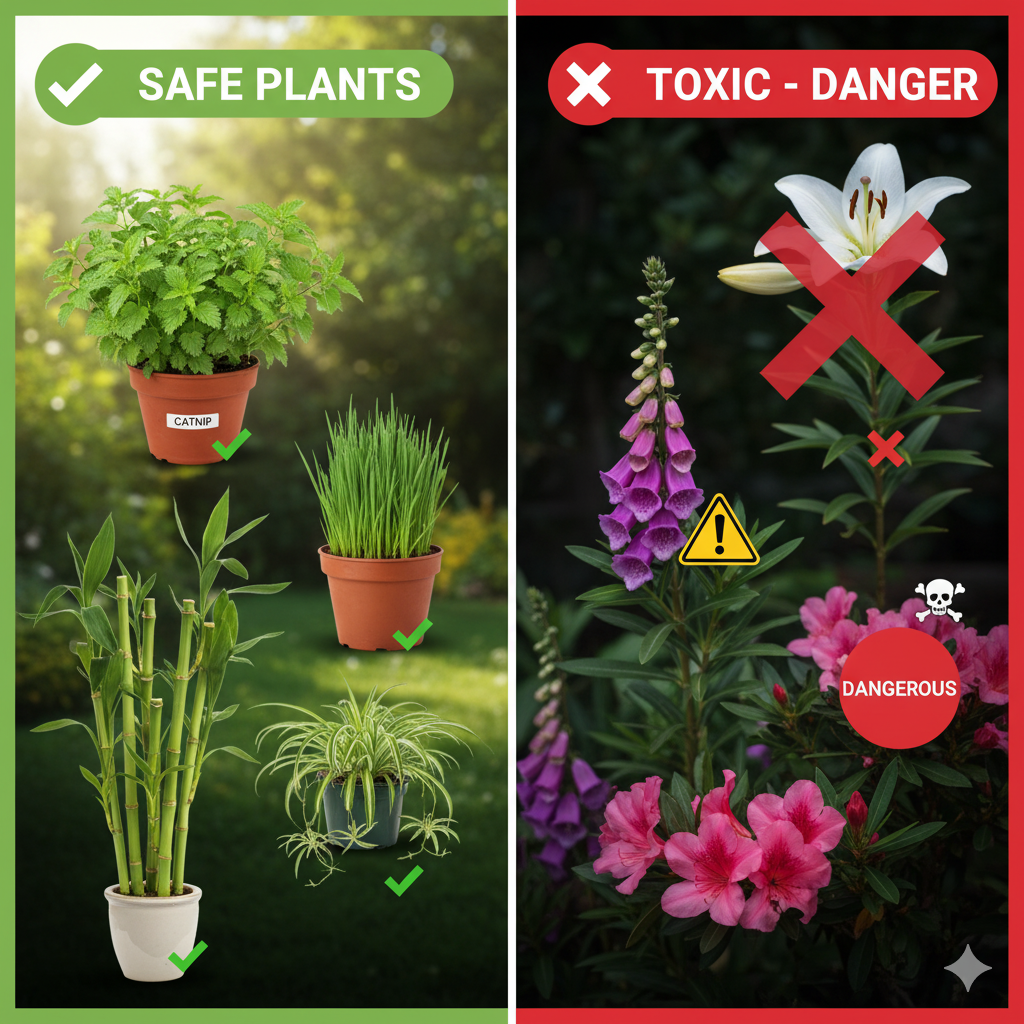
These aren’t “maybe toxic” or “might cause upset stomach.” These plants cause organ failure, cardiac arrest, or neurological damage. Remove them completely from any space your cat can access.
Lilies – The Most Dangerous Plant for Cats: Every single part of true lilies (Lilium species) and daylilies (Hemerocallis species) is lethally toxic to cats. Ingesting just two petals or leaves causes acute kidney failure. Even pollen transferred to fur and then groomed off can be fatal. Symptoms appear within hours: vomiting, lethargy, loss of appetite, drooling, and kidney failure (within 18-72 hours). Without immediate veterinary intervention (within 18 hours), permanent kidney damage or death is likely.
Other confirmed deadly plants include foxglove (Digitalis)—contains cardiac glycosides affecting heart rhythm; oleander (Nerium oleander)—extremely toxic, even small amounts can be fatal; azaleas and rhododendrons—cause vomiting, diarrhoea, lethargy, and potentially fatal cardiac issues; sago palm (Cycas revoluta)—causes liver failure; autumn crocus (Colchicum autumnale)—causes organ damage and bone marrow suppression; tulips and daffodils—bulbs are especially toxic; yew (Taxus baccata)—cardiac toxin that can cause sudden death; and chrysanthemums—cause drooling, vomiting, diarrhoea.
When in Doubt: Cross-reference any plant against the ASPCA’s Toxic and Non-Toxic Plants database before introducing it to your garden.
Designing Safe Structures: Catios and Secure Enclosures
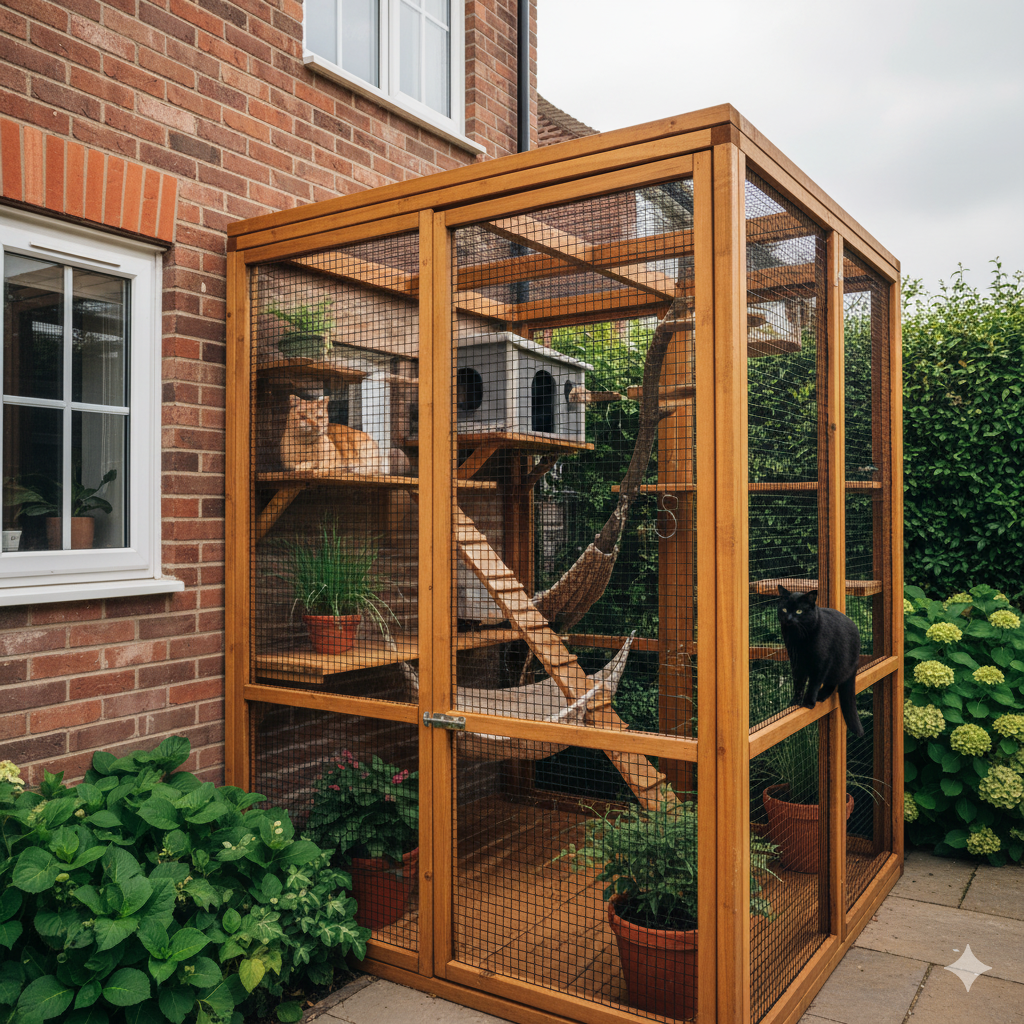
Free-roaming outdoor access is off the table if you care about your cat’s lifespan. Cars, predators, diseases, parasites, and territorial disputes with other cats dramatically reduce life expectancy. The solution? Controlled outdoor access through catios (cat patios) or enclosed gardens. For year-round outdoor access, explore our recommendations for the best outdoor cat houses.
Building or Buying a Catio: Essential Specifications
A catio is a fully enclosed outdoor structure that provides safe access to fresh air, sunshine, and natural stimulation. Use sturdy welded wire mesh with gaps no larger than 2.5cm (1 inch). Frame materials should be solid wood (pressure-treated, pet-safe) or metal—no flimsy materials. All corners and connection points must be reinforced. Consider double-layering mesh if you have foxes, badgers, or large birds of prey in your area. Install buried wire mesh or concrete footing to prevent digging predators.
Access points should include a cat door from your house providing 24/7 access (optional), a human access door essential for maintenance and interaction, and latch systems that are cat-proof but easy for humans—magnetic or combination locks work well. Cats feel safer with escape routes—design at least two exit points.
Essential features include vertical territory with multiple levels at varying heights (minimum 3 levels), with the highest perch at 1.8-2m for territorial surveillance. Include shaded areas covering 50% of space for temperature regulation, sunny spots for sunbathing, weatherproof shelter with solid roof for rain protection, and windbreaks using strategic planting or solid panels.
Provide weatherproof cat beds in sheltered spots, hammocks suspended between supports, elevated platforms with overhead cover for security, and heated pads for winter months (low-voltage outdoor-rated).
Climbing Structures and Environmental Enrichment
Cats are vertical thinkers. A cat garden without climbing opportunities misses the point entirely. If you’re creating indoor spaces too, check our guide on choosing the perfect cat tree.
Use natural tree branches secured horizontally and vertically (untreated wood only), large logs positioned at angles (45-60 degrees ideal), rock formations creating caves and platforms, and sturdy shrubs with strong branch structures. Add outdoor-rated cat trees with weather-resistant materials, wall-mounted sisal-wrapped posts for scratching, rope bridges between elevated platforms, and wooden ramps with non-slip surfaces.
Play areas should include secure tunnels with multiple interconnected options (3-5 tunnels), varied diameters (25-40cm), and peek-holes cut into sides for surveillance. Avoid dead-ends—cats dislike feeling trapped. Position hiding spots using dense plantings of rosemary and lavender (cat-safe aromatics), low-growing shrubs creating cave-like spaces, and ornamental grasses (non-toxic varieties) for concealment.
Keep a selection of outdoor-specific toys and rotate them weekly to maintain novelty. Include feather wands secured to stakes for solo play, puzzle feeders promoting foraging behaviour, catnip-filled toys refreshed every 2-3 weeks, ball tracks or rolling toys, and motion-activated toys (battery-powered).
Maintenance and Safety Protocols
Creating the garden is step one. Maintaining safety is ongoing. This is as important as regular vet visits for your cat’s health.
Weekly Safety Checklist
Inspect mesh for tears, rust, or separation. Check latches and locks function properly. Look for digging evidence around perimeter. Verify all connection points remain secure. Test structural stability of climbing elements. Remove any toxic weeds that have sprouted. Trim back overgrown plants blocking pathways. Check safe plants for pest infestation. Remove dead plant material that could harbour bacteria. Inspect for poisonous mushrooms after rain.
Clean water features and refresh water. Remove faeces from litter areas daily. Sweep hard surfaces of debris. Check for standing water (mosquito breeding ground).
Pest Control and Chemical Safety
Never use these in cat gardens: Slug pellets (metaldehyde)—lethal to cats, causes seizures; conventional pesticides—neurotoxins affecting cats; herbicides (glyphosate-based)—potential carcinogen; cocoa mulch—contains theobromine (chocolate toxin); fertilisers with bone meal—can cause intestinal blockage if ingested; ant poison—highly toxic if consumed; rodenticides—cause fatal internal bleeding.
Safe alternatives include manual weed removal (most effective, zero risk), diatomaceous earth (food-grade only) for crawling insects, pet-safe organic pesticides (verify EVERY ingredient), neem oil diluted properly for plant pests, and encouraging natural predators like birds, ladybirds, and lacewings.
Seasonal Adjustments and Special Considerations
Cat gardens aren’t static. Temperature extremes, precipitation, and daylight hours all affect usability. In summer, ensure adequate shade during peak heat (11am-3pm), provide multiple water sources to prevent dehydration, and monitor for heat stress. In winter, provide heated shelters, prevent water sources from freezing, clear snow from pathways, and monitor time outdoors during freezing weather.
For senior cats (10+ years), lower climbing structures (max 1m height), use ramps instead of jump platforms, provide extra padded rest areas, and ensure easier access points with no high thresholds. Kittens (under 6 months) need smaller mesh gaps (1.5cm maximum), shorter climbing heights to prevent falls, and constant supervision initially.
If you’re introducing a new cat to your household, a garden space can ease territorial tensions by providing additional territory and reducing resource competition.
Supervision and Smart Introduction
Even in a secure cat garden, supervision matters—especially initially. For days 1-3, conduct 15-20 minute supervised sessions, staying present the entire time. Observe stress signals like flattened ears, dilated pupils, or hiding. Allow your cat to explore at their own pace—don’t force interaction with features. Multiple short sessions per day work best.
Days 4-7, increase to 30-45 minute supervised sessions. Note which areas attract most attention and watch for escape attempts (these indicate design flaws). Monitor interactions with plants. Begin introducing toys during sessions.
Days 8-14, start supervised sessions from a distance (inside the house). Monitor through windows and gradually increase unsupervised time. Watch for behaviour changes—sudden avoidance indicates problems. Ensure your cat knows how to return inside confidently.
Never leave cats unsupervised if the garden isn’t fully enclosed, during extreme weather conditions, when neighbouring cats are visible (territory stress), or during Halloween or fireworks season when stress triggers are high.
Final Thoughts: Investment Worth Making
Creating a cat-friendly garden requires upfront effort, ongoing maintenance, and financial investment. But the payoff—a mentally stimulated, physically active, behaviourally fulfilled cat—is substantial and measurable. Indoor cats with access to well-designed outdoor spaces show 65% reduction in stress-related behaviours, 40% increase in physical activity levels, lower rates of obesity and associated health problems, and decreased destructive indoor behaviour.
The key is doing it right from the start: genuinely safe plants (not just “probably fine”), structurally sound enclosures (not flimsy netting), and consistent maintenance (not “set and forget”). This guide provides the framework for creating an outdoor space that genuinely enhances your cat’s quality of life and wellbeing. Build it properly. Maintain it consistently. Your cat will thank you by living a longer, healthier, more enriched life.
Frequently Asked Questions
What plants are genuinely safe for a cat-friendly garden?
Verified safe options include catnip, cat grass, true bamboo (not “lucky bamboo”), cat thyme, valerian, lemongrass, Boston fern, and parlour palm. Always cross-reference with the ASPCA database.
Why are lilies so dangerous to cats?
All parts of true lilies cause acute kidney failure in cats. Even two petals can be lethal. Symptoms appear quickly and require emergency veterinary care within 18 hours.
Is “lucky bamboo” safe for cats?
No. Lucky bamboo (Dracaena sanderiana) is toxic to cats, causing vomiting, dilated pupils, and weakness. Only genuine bamboo is safe.
How do I cat-proof my garden against escape?
Use fully enclosed structures with 2.5cm mesh gaps, minimum 2-metre fence height with inward-angled barriers, and buried wire mesh (30cm deep) at the fence base.
What enrichment features should I include?
Essential elements include multiple vertical levels, shaded and sunny areas, scratching posts, secure tunnels, hiding spots, elevated perches, and rotating toys.
Can indoor cats safely transition to using a cat garden?
Absolutely. Start with 15-minute supervised sessions, gradually increasing time over 2 weeks. Monitor for stress signals during initial sessions.
What should I do if my cat eats a toxic plant?
Contact your vet immediately—don’t wait for symptoms. Identify the plant if possible. Do NOT induce vomiting unless instructed. Transport cat immediately with plant identification.
For comprehensive plant toxicity information: ASPCA Toxic and Non-Toxic Plants List
Related Articles:
- Indoor vs Outdoor: Choosing the Best Lifestyle
- Enhancing Your Cat’s Mental Stimulation
- Ultimate Guide to Reducing Cat Stress