The British Shorthair is an icon of the feline world. With their chubby cheeks, dense plush coats, and copper-coloured eyes, they are often compared to living teddy bears. They are the oldest natural breed in Britain, tracing their lineage back to the street cats of Rome, yet today they grace the sofas of modern homes with a quiet, majestic dignity.
However, beneath that calm and undemanding exterior lies a breed with very specific needs. Their stocky build makes them prone to joint issues and obesity; their shortened muzzles can lead to dental complications; and their dense coats require a specific type of grooming to prevent discomfort.
This is not just a brief overview; this is the definitive, essential British Shorthair care guide. Whether you are bringing a kitten home for the first time or looking to improve the life of your senior cat, this 3000-word manual covers every aspect of their physical and mental wellbeing.
Part 1: Understanding the British Shorthair Temperament and Physiology
To care for a British Shorthair effectively, you must first understand what makes them biologically and psychologically unique.
The “Cobby” Physique
In cat fancy terms, the British Shorthair is described as “cobby.” This means they are compact, muscular, and heavy-boned. A healthy male can weigh anywhere between 4kg and 8kg (9–17 lbs), while females are slightly smaller but still robust at 3kg to 5.5kg (7–12 lbs). Because of this heavy bone structure, they are not built for agility in the same way a Siamese or a Bengal is. You will rarely see a British Shorthair scaling the curtains or performing acrobatic leaps to the top of a doorframe. They are ground-dwellers, preferring stability. This physiology dictates much of their care: their joints are under more pressure than lighter breeds, making weight management the single most critical factor in their longevity.
The “Low-Affect” Personality
British Shorthairs are famous for their “stiff upper lip.” They are affectionate but not clingy. They will follow you from room to room to supervise your activities, but they generally dislike being held or contained.
-
The Lap Cat Myth: Many new owners are disappointed that their “teddy bear” won’t sit on their lap. This is not a sign of a lack of affection; it is a physical preference. Their heavy bodies can feel unsupported and unstable when lifted, causing them stress.
-
The Quiet Companion: They are not vocal. If a British Shorthair is meowing loudly, something is usually wrong. This “low-affect” personality means they often hide illness or pain very well, requiring owners to be hyper-vigilant to subtle changes in behaviour.
Part 2: Nutritional Mastery and Weight Management

In every essential British Shorthair care guide, diet is the headline act. This breed is genetically predisposed to obesity. In the wild, their ancestors were sturdy working cats designed to survive cold winters; in a modern, temperature-controlled apartment, that efficient metabolism becomes a liability.
The Obesity Epidemic
Veterinary studies indicate that British Shorthairs have one of the highest rates of obesity among pedigree cats. Excess weight in this breed is not just a cosmetic issue; it drastically increases the risk of:
-
Diabetes Mellitus: Fat tissue produces hormones that disrupt insulin regulation.
-
Arthritis: Their heavy joints cannot support extra weight, leading to chronic pain and reduced mobility.
-
Hepatic Lipidosis: Rapid weight gain (or loss) can cause fatty liver disease, which is fatal if untreated.
Calculating Calories, Not Just Filling Bowls
The days of “free-feeding” (leaving a bowl of dry food out all day) must end when you own a British Shorthair. They are opportunistic eaters and often eat out of boredom.
-
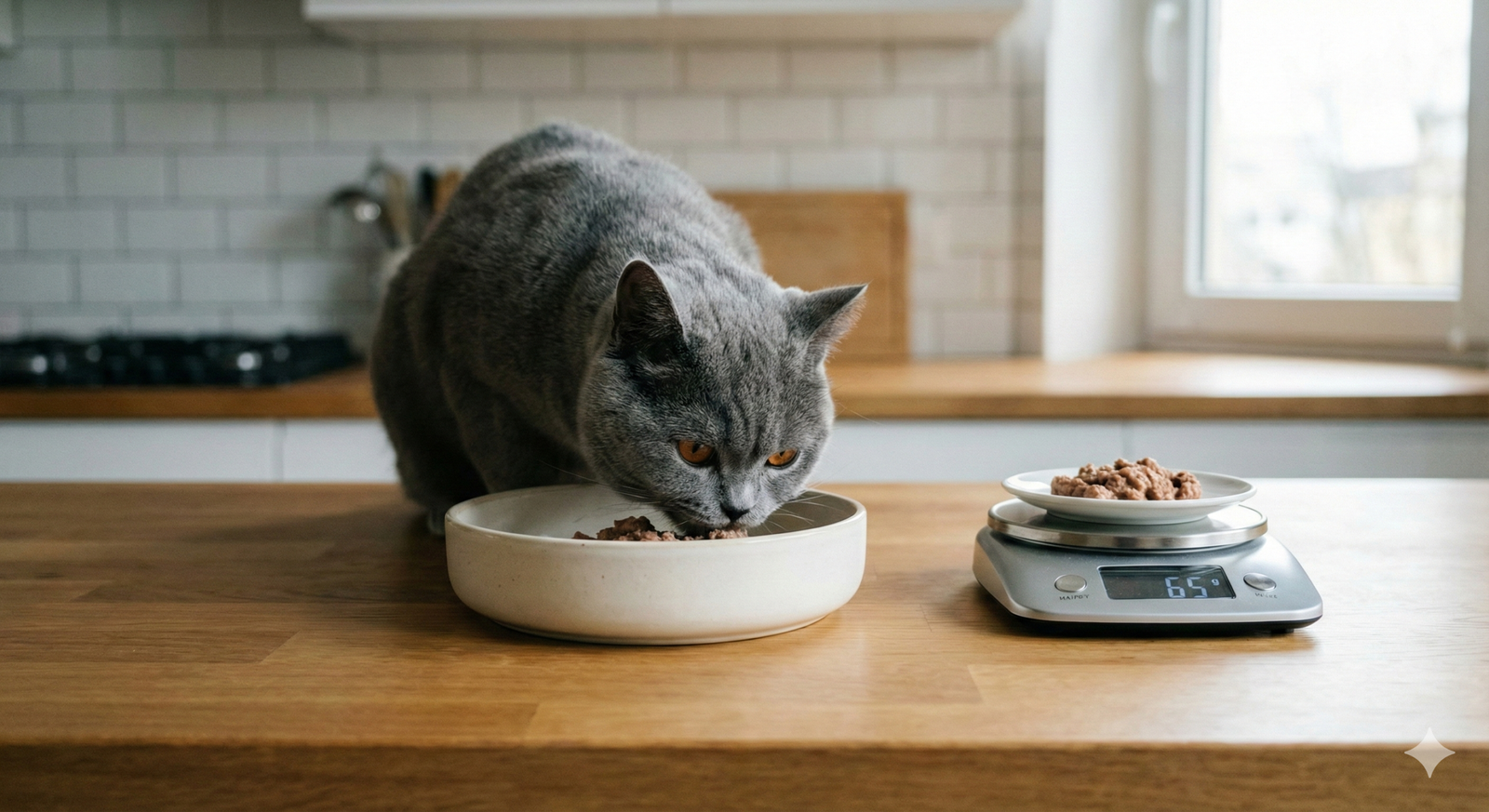
The Calculation: You should calculate your cat’s Resting Energy Requirement (RER). A general rule of thumb for a neutered, indoor British Shorthair is roughly 40–50 calories per kg of their ideal body weight.
-
Wet vs. Dry Food: For this breed, wet food is superior. Dry kibble is calorie-dense and carbohydrate-heavy. British Shorthairs do not need carbohydrates; they need high-quality animal protein to maintain their muscle mass. Wet food also adds volume (water) which helps them feel full without adding calories.
Handling Food Sensitivities
British Shorthairs can have sensitive stomachs. If you notice your cat vomiting frequently or having loose stools, they may be reacting to common fillers like corn, wheat, or soy. In some cases, they may develop allergies to specific proteins like chicken or beef. If you suspect a dietary issue, do not guess. Read our comprehensive resource on Cat Food Allergies: Symptoms, Causes, and Treatments to learn how to conduct an elimination diet properly.
Hydration Strategies
Kidney function is a concern for all ageing cats. British Shorthairs have a low thirst drive. To ensure they remain hydrated:
-
Water Fountains: Cats prefer running water as it mimics fresh streams.
-
Wide Bowls: This breed has large, round heads and prominent whiskers. Narrow bowls cause “whisker fatigue,” a sensory overload that happens when whiskers touch the sides of the bowl. Use wide, shallow ceramic or steel dishes.
Part 3: The Art of Grooming the Plush Coat
The coat of a British Shorthair is its crowning glory. It is described in breed standards as “crisp”—it should not be soft and flowing like a Persian, but dense and firm, breaking over the cat’s body like a plush carpet.
Understanding the Density
This breed has a “double coat.”
-
The Guard Hairs: The longer, coarser hairs that you see on the surface.
-
The Undercoat: A thick, downy layer close to the skin that provides insulation.
Because the coat is so dense, dead hair does not fall out easily; it gets trapped in the undercoat. If you do not brush it out, your cat will ingest it while grooming. This leads to massive hairballs that can cause intestinal blockages—a medical emergency.
The Weekly Grooming Ritual
You do not need to groom them daily (except during shedding season), but a thorough weekly session is mandatory.
-
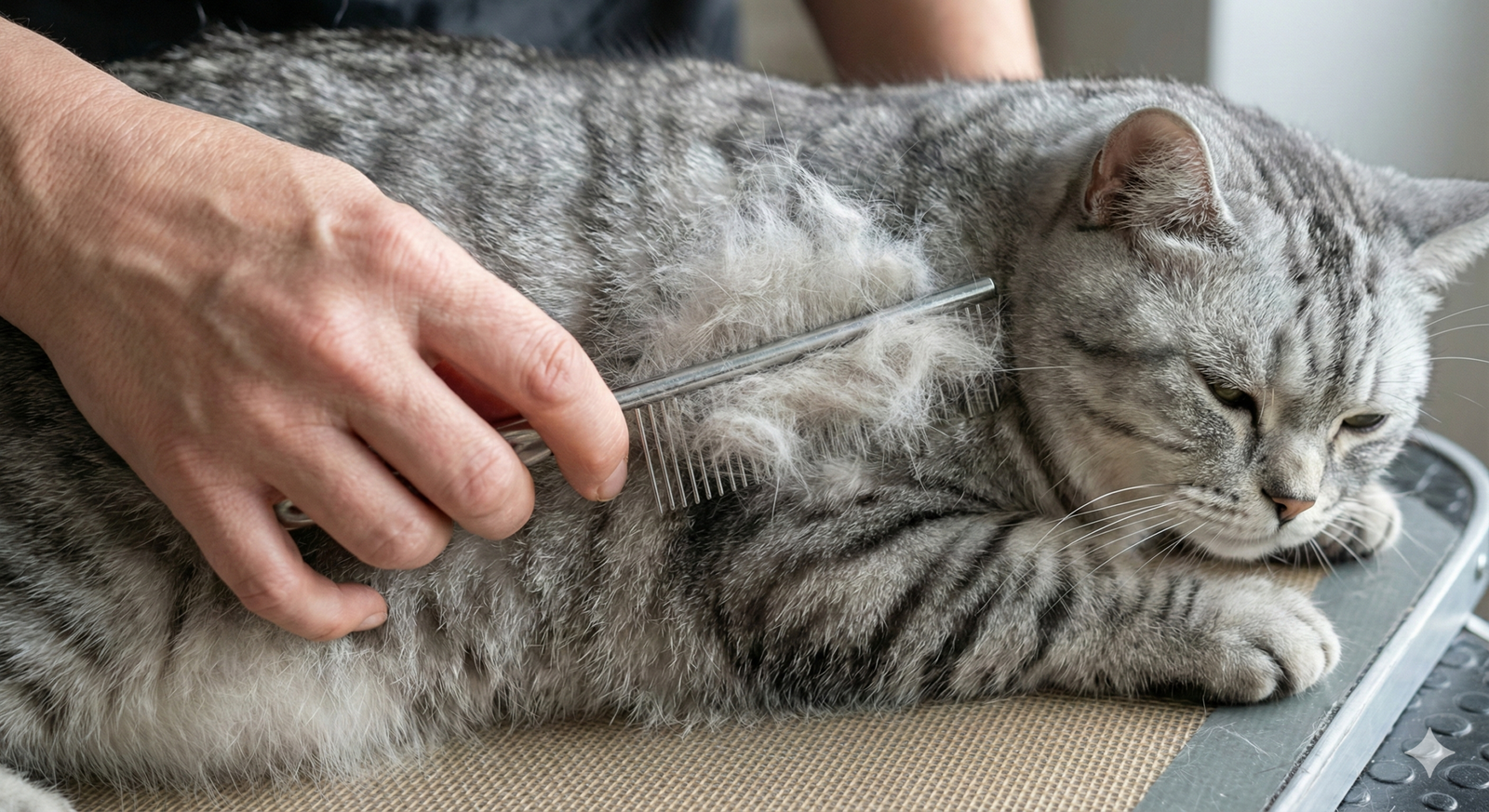
The Tool Kit: Do not use a standard bristle brush; it will just skim the surface. You need a metal comb (greyhound comb) or a slicker brush.
-
The Technique: Work through the coat in sections. Part the fur to ensure you are combing from the root. Pay special attention to the armpits and the area behind the ears, as even shorthaired cats can develop mats in friction zones.
-
The “Moult”: Twice a year (Spring and Autumn), your British Shorthair will “blow” their coat. During these weeks, you will need to brush them daily. You might be shocked at the volume of fur that comes off—enough to knit a second kitten!
For a step-by-step breakdown of tools and advanced techniques, refer to our The Ultimate Guide to Cat Grooming.
Nail and Ear Care
-
Nails: Because they are sedentary, they may not wear their claws down naturally on scratching posts. Check their claws every two weeks and trim the tips to prevent them from curling into the paw pads.
-
Ears: Their small ears can trap wax. Wipe them out gently with a cotton pad (never a Q-tip) and a vet-approved ear cleaner once a month.
Part 4: Health Vigilance and Breed-Specific Risks
A robust essential British Shorthair care guide must address the genetic lottery. While they are generally healthy cats with a lifespan of 12–20 years, there are three major health shadows that hang over the breed.
1. Hypertrophic Cardiomyopathy (HCM)
HCM is a condition where the muscular walls of the heart thicken, decreasing the heart’s efficiency and potentially leading to heart failure or blood clots.
-
The Risk: Prevalence in British Shorthairs is significant, particularly in males.
-
The Symptoms: HCM is often a “silent killer.” Symptoms like lethargy, rapid breathing, or panting often only appear when the disease is advanced.
-
The Strategy:
-
Ask the Breeder: Ensure the parents were scanned for HCM.
-
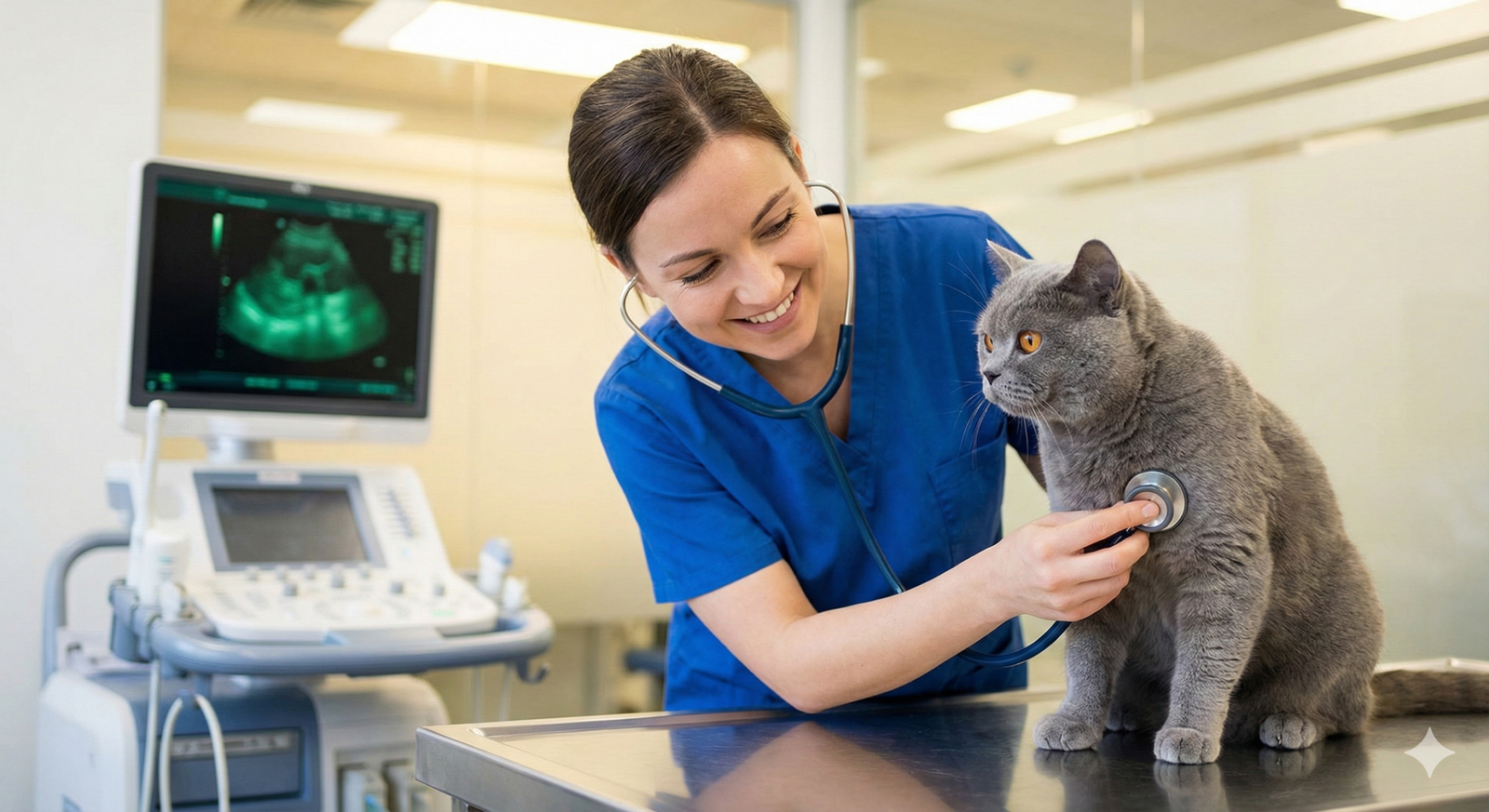
Annual Auscultation: Your vet should listen to your cat’s heart at every vaccination.
-
ProBNP Blood Test: This is a simple blood test that can detect heart stress markers. Request this annually once your cat turns three.
-
2. Polycystic Kidney Disease (PKD)
This is a devastating disease where fluid-filled cysts replace healthy kidney tissue, eventually leading to kidney failure. It was introduced into the breed when British Shorthairs were cross-bred with Persians to improve coat density.
-
The Solution: This is entirely preventable through genetic testing. Never buy a kitten from a breeder who cannot show you the PKD-negative certificates for both parents. If you have a rescue British Shorthair, a simple ultrasound can confirm if they have the cysts.
3. Dental Disease and Brachycephaly
British Shorthairs are considered “moderate brachycephalic” cats. They have round heads and shorter muzzles than the average moggy.
-
The Consequence: Their teeth are often overcrowded and may be misaligned. This creates hiding spots for plaque and tartar.
-
Gingivitis: This breed is notorious for aggressive gum inflammation. If left untreated, bacteria from the mouth can enter the bloodstream and damage the kidneys and heart.
-
Prevention: Brushing a cat’s teeth is the gold standard, but if your British Shorthair resists, consider dental additives for their water or enzymatic gels.
-
Vet Intervention: You will likely need to budget for professional veterinary dental cleaning under anaesthesia every 1–2 years. For more on finding a vet equipped for this, see Choosing a Veterinarian for Your Cat: A Comprehensive Guide.
4. The Blood Type B Issue
This is a highly specific but crucial detail for this breed. Unlike most domestic cats (who are Type A), approximately 40–50% of British Shorthairs have Type B blood.
-
Why this matters: If your cat ever needs a blood transfusion and receives Type A blood, the reaction can be fatal.
-
Breeding Risk: If a Type B queen (female) mates with a Type A tom (male), the kittens may have Type A blood. When they nurse, the antibodies in the mother’s milk will attack the kittens’ red blood cells. This is known as Neonatal Isoerythrolysis (Fading Kitten Syndrome). This is why professional breeding of British Shorthairs requires blood typing, not just putting two cats together.
Part 5: Exercise and Environmental Enrichment
Because the British Shorthair is prone to laziness, exercise is not optional—it is a medical prescription. However, you cannot treat them like a dog or a high-energy Bengal. You have to engage them on their terms.
The “Explosive” Play Method
British Shorthairs are ambush predators. They do not like to run for minutes on end. They prefer to stalk, wait, and then explode into action for a few seconds.
-
Interactive Toys: Use wand toys (feathers or ribbons) to mimic the movement of a mouse or bird. Drag the toy behind furniture to trigger their stalking instinct.
-
Duration: Aim for three 10-minute sessions per day rather than one long session. This mimics their natural hunting rhythm.
-
The Best Gear: You don’t need expensive gadgets, but durable toys are essential for their strong jaws. We have tested the market for you—check out our recommendations in The Ultimate Guide on the Best 6 Cat Toys to Keep Your Feline Indoors.
Vertical Territory (With Modifications)
While they aren’t tree-dwellers, they still need vertical space to feel secure. However, due to their heavy build, flimsy cat trees are dangerous.
-
Sturdy Structures: Ensure any cat tree has a wide, heavy base that won’t tip over when a 7kg cat jumps on it.
-
Accessibility: As they age, arthritis can set in. Look for cat trees with steps or ramps rather than large vertical gaps between platforms.
Plant Safety
British Shorthairs are sometimes bored chewers. If you have houseplants, they will likely be sampled. Many common plants (like Lilies) are instantly fatal to cats. Before bringing any greenery into your home, cross-reference it with our safety list: 10 Cat-Friendly Houseplants: Safe Greens for Your Feline Friend.
Part 6: Behaviour, Socialisation, and Stress Management
A happy British Shorthair is a stress-free British Shorthair. While they look stoic, they internalise stress, which can lead to cystitis (bladder inflammation) and over-grooming.
Respecting the “Four Paws” Rule
We mentioned this earlier, but it bears repeating in the context of behaviour. If you constantly pick up a British Shorthair against their will, they will start to avoid you.
-
How to Bond: Sit on the floor. Let them come to you. They will likely head-butt your hand or sit next to your thigh. This is their highest compliment.
-
Handling Training: If you must pick them up (for the vet or travel), support their entire body weight. One hand under the chest, one hand fully supporting the hindquarters. Never let their back legs dangle.
Introducing New Family Members
British Shorthairs are generally good with dogs and other cats because they are not easily provoked. However, they hate chaos.
-
The Slow Introduction: When bringing a new pet (or human baby) into the home, do it gradually. Scent swapping—where you rub a cloth on the new pet and let the resident cat smell it—is vital.
-
Safe Zones: Ensure your British Shorthair always has a room or a high perch where the new addition cannot reach them.
-
Further Reading: If you are planning to expand your fur family, do not skip the protocols outlined in Introducing a New Cat to Your Home: A Step-by-Step Guide.
Stress Signals
Because they are so quiet, you need to watch for physical signs of stress:
-
Over-grooming (bald patches on the belly).
-
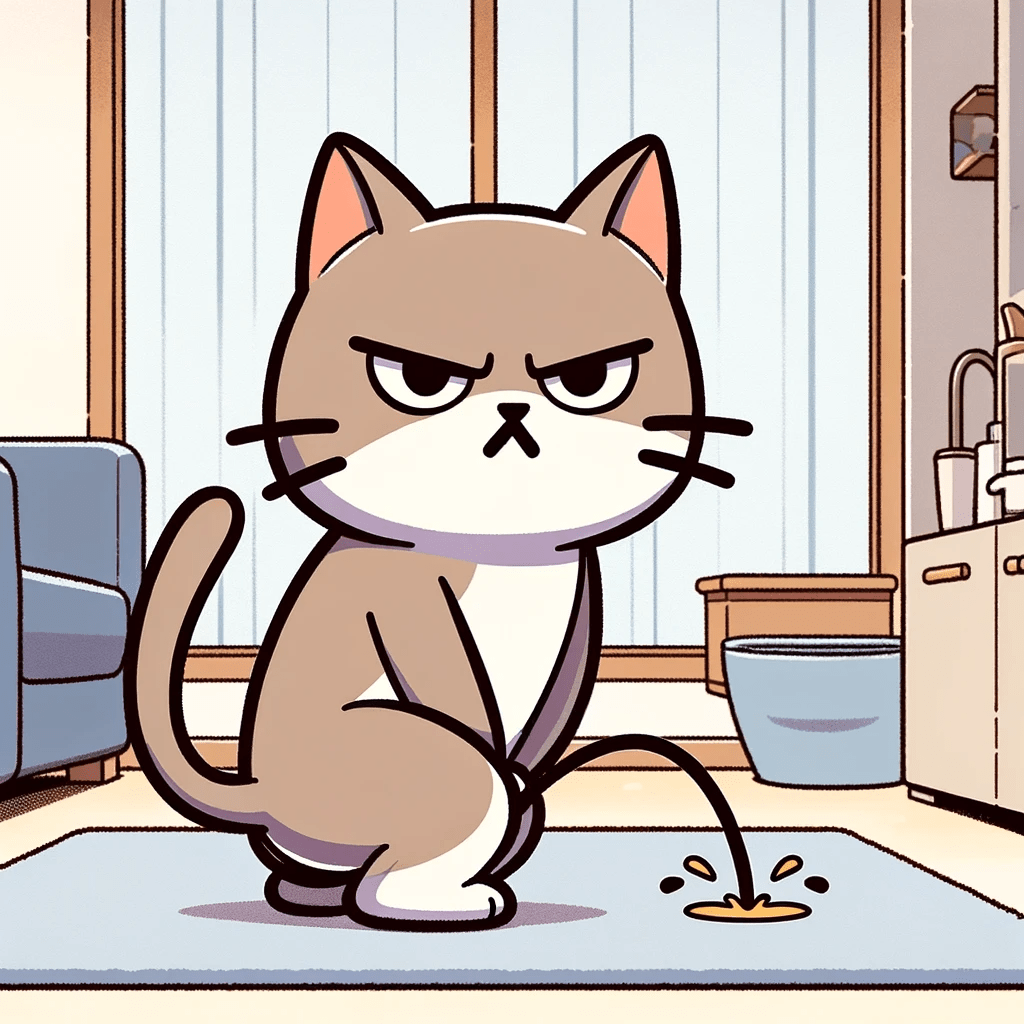
Urinating outside the litter box.
-
Hiding more than usual.
-
Changes in appetite.
If you notice these, investigate environmental triggers immediately. Our Ultimate Guide to Reducing Cat Stress and Anxiety offers actionable solutions for calming a nervous cat.
Part 7: Life Stages – From Kitten to Senior
Your essential British Shorthair care guide changes as your cat ages. Here is the timeline of care.
Kittenhood (0–12 Months)
-
Growth Rate: British Shorthairs grow slowly. They may look like adults at 1 year, but they are not fully physically mature until 3–5 years old.
-
Diet: Keep them on kitten food for at least the first 12 months to support bone density development.
-
Socialisation: Handle their paws and look in their mouths daily. If you don’t desensitise them to this now, you will never be able to trim their claws or brush their teeth when they are 8kg adults.
Adulthood (1–7 Years)
-
The Prime: This is when they are most active, but also when weight creeps on.
-
Monitoring: Weigh your cat monthly. If you see the number creeping up, adjust food intake immediately. Do not wait until they are obese to act.
The Senior Years (7+ Years)
-
Mobility: Watch for stiffness when they wake up or hesitation before jumping. This suggests arthritis.
-
Modifications: Add steps to the sofa or bed. Switch to a litter box with lower sides so they don’t have to hop in.
-
Dietary Switch: Senior diets have lower phosphorus to protect the kidneys and higher joint supplements (glucosamine/chondroitin).
Part 8: The Financial Commitment
Owning a British Shorthair is an investment. Beyond the initial purchase price of a pedigree kitten, you must factor in:
-
Insurance: Because of the high cost of treating conditions like HCM or dental surgery, comprehensive pet insurance is highly recommended. Ensure your policy covers “hereditary conditions.”
-
Quality Food: High-protein, grain-free wet food is more expensive than supermarket kibble, but it will save you money on vet bills for diabetes and obesity in the long run.
-
Preventative Care: Monthly flea/worm treatments and annual vaccinations are non-negotiable.
Frequently Asked Questions
Q: Do British Shorthairs shed a lot? A: Yes. Do not let the “Shorthair” name fool you. Their coat is incredibly dense. They shed moderately all year round and heavily twice a year. If you want a hair-free home, this is not the breed for you.
Q: Can British Shorthairs be left alone? A: They are better at being alone than breeds like Siamese or Burmese, making them good for working professionals. However, they are not hermits. If you are gone for 10 hours a day, they will become lonely and depressed. Consider a pair of kittens if you work long hours.
Q: Are they aggressive? A: Rarely. They are known as gentle giants. If a British Shorthair bites or scratches, it is usually because they are in pain or their boundaries have been repeatedly ignored.
Q: Why is my British Shorthair not cuddly? A: As discussed, they show love by presence, not touch. If your cat sleeps in the same room as you, greets you at the door, or exposes their belly to you (a sign of trust, not an invitation to rub!), they love you deeply.
Q: How long do British Shorthairs live? A: With proper weight management and indoor living, they typically live 14–20 years.
Conclusion: The Reward of Companionship
The British Shorthair is a breed that rewards patience and respect. They are not demanding divas; they are steadfast companions who bring a sense of calm and stability to a home. Their presence is grounding, their purr is a comfort, and their loyalty is absolute.
However, this loyalty must be returned in the form of diligent care. By adhering to this essential British Shorthair care guide—watching their waistline, keeping their heart healthy, and respecting their independence—you are ensuring that your teddy bear leads a life as majestic as their heritage.
For more community support and resources, or to connect with other British Shorthair lovers, visit the CatLives.co.uk home page. Remember, a healthy cat is a happy cat, and there is no cat quite like the British Shorthair.