Medication Administration Tips for Cats: The Ultimate Comprehensive Guide
Administering medication to cats is widely regarded as one of the most stressful aspects of pet ownership. Whether you are dealing with a feisty kitten or a stubborn senior, the struggle to ensure they swallow a pill or accept a syringe can lead to “pill-induced” anxiety for both the feline and the human. However, medical compliance is non-negotiable for your cat’s recovery and long-term health.
In this comprehensive guide, we will explore advanced medication administration tips for cats that go beyond the basics. We will cover safety protocols to prevent esophageal damage, the physics of liquid administration to avoid pneumonia, and how to utilize modern veterinary compounding to take the “battle” out of the process.
1. Understanding the Landscape of Cat Medications
Before mastering the delivery, you must understand what you are working with. Veterinary medicine has advanced significantly, and today, there are more ways than ever to deliver a dose.
Common Forms of Medication
-
Pills and Capsules: These remain the most common and cost-effective. However, they carry the highest risk of “dry pilling” complications.
-
Suspensions (Liquids): Often easier to hide in food, but harder to dose if the cat is a “spitter.”
-
Transdermal Gels: These are applied to the skin, usually the inner ear, and are absorbed directly into the bloodstream.
-
Injectables: Commonly used for chronic conditions like diabetes or for long-acting antibiotics (like Convenia).
-
Compounded Chews: Custom-made treats that taste like chicken or tuna but contain the medication.
If you find that one form is simply not working, refer to how to tell if your cat is sick to monitor if their condition is worsening due to missed doses.
2. Preparing for Success: The Setup
The secret to successful medication administration tips for cats lies in the minutes before you ever touch the cat. Cats are masters of body language; if they see you opening a foil packet and looking nervous, the game is over before it begins.
The Consultation Phase
Always speak with your vet about the “palatability” of the drug. Some medications are incredibly bitter (like Metronidazole) and should never be crushed, as the taste will cause a cat to foam at the mouth. Ask:
-
Can this be given with food?
-
Is there a liquid alternative?
-
What are the cat health tips for managing the specific side effects of this drug?
Gathering Your Arsenal
Don’t walk toward your cat with just a pill. You need:
-
The Medication.
-
A “Chaser”: A 3ml syringe filled with water or low-sodium tuna juice.
-
Pill Pockets: These are malleable treats.
-
A Large Bath Towel: For the “Kitty Burrito” or “Purrito” restraint.
-
High-Value Rewards: Think Churu, boiled chicken, or shrimp.
3. Techniques for Administering Pills Safely
Pilling is where most owners fail. The biggest mistake is “dry pilling”—dropping a dry tablet into a dry throat. In cats, a pill can take up to 10 minutes to travel down the esophagus. If it gets stuck, it can cause esophagitis or permanent scarring (strictures).
The “Wet Swallow” Method
This is the gold standard for medication administration tips for cats:
-
The Preparation: Coat the pill in a tiny bit of butter or feline-safe lubricant. This helps it slide.
-
The Restraint: Gently wrap your cat in a towel. This prevents them from using their “murder mittens” to push your hand away.
-
The Grip: Place your hand over the top of the cat’s head. Your thumb and index finger should rest on the “corners” of the mouth.
-
The Tilt: Gently tilt the nose toward the ceiling. The lower jaw will naturally drop slightly.
-
The Drop: Use your other hand to pull the lower jaw down further and drop the pill onto the very back of the tongue.
-
The Follow-Up (Critical): Immediately use your water syringe to give the cat 2–3ml of water. This flushes the pill into the stomach, preventing throat burns.
The Three-Treat Deception
If your cat still eats treats, use the “sandwich” method. Give one plain treat, then the medicated treat (hidden in a pill pocket), then a third plain treat immediately after. The cat will often swallow the second one whole in anticipation of the third.
4. Administering Liquid Medications
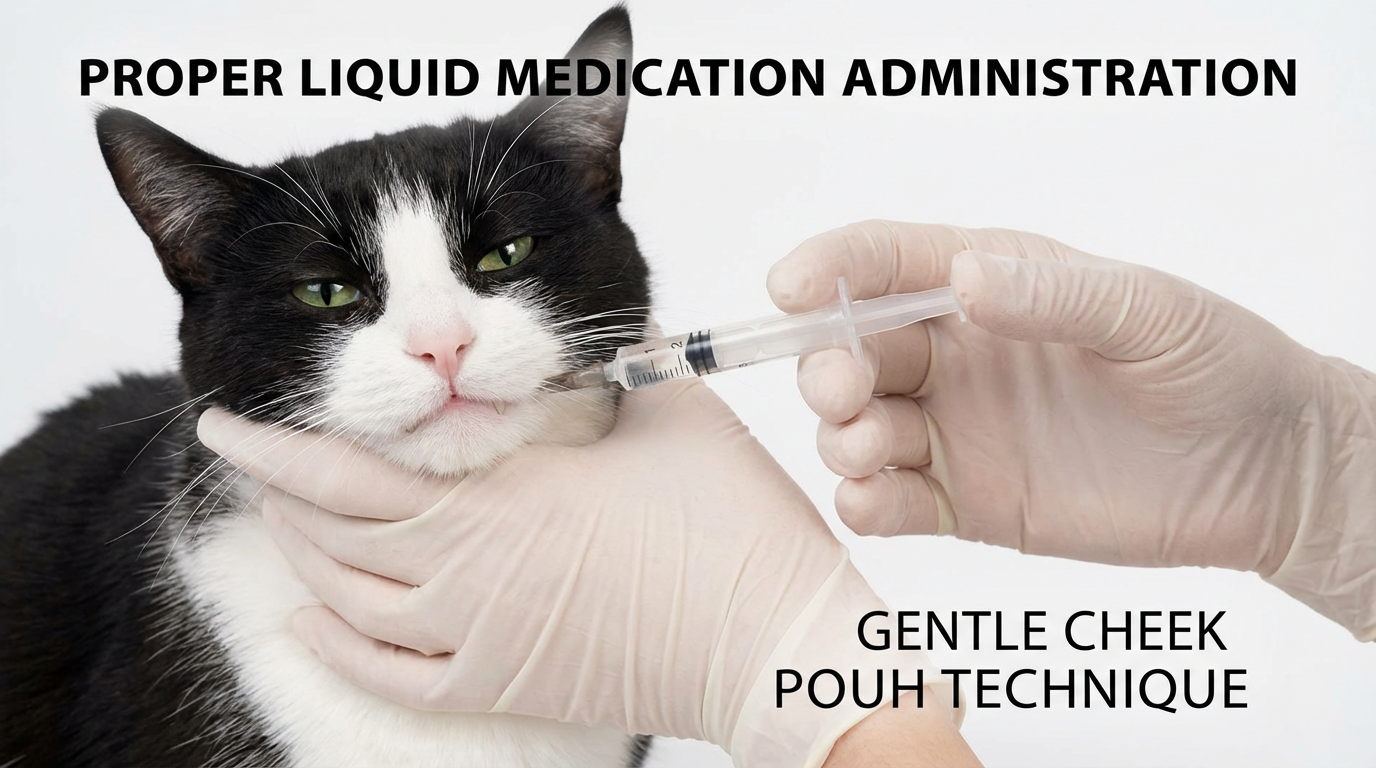
Liquid medication is often prescribed for kittens or for medications that require precise dosing. However, it carries the risk of aspiration, where the cat breathes the liquid into their lungs.
The Side-Pouch Technique
-
Do Not Tilt the Head Back: Unlike pilling, keep the cat’s head level. Tilting the head back makes it harder for them to close their airway.
-
The Target: Aim for the “pouch” between the teeth and the cheek.
-
Slow Delivery: Squirt a small amount, wait for the cat to swallow, then continue. If you see the cat “tonguing” the liquid or licking their nose, you are doing it correctly.
If your cat is struggling with weight loss during a liquid regimen, check out our guide on cat grooming to help them maintain their coat while they feel unwell.
5. Transdermal and Topical Administration
When oral administration is impossible, transdermal medications are a miracle. These are often used for thyroid issues or appetite stimulants.
-
Safety First: Always wear gloves. If the medication can go through a cat’s skin, it can go through yours.
-
The Application Site: The inner pinna (the hairless part of the ear flap) is the best spot.
-
Rotation: Do not apply to the same ear every day. Switch back and forth to prevent the skin from becoming leathery or irritated.
-
Cleaning: Every 2–3 days, gently wipe the ear with a warm, damp cloth to remove any waxy buildup from the medication carrier.
6. Dealing with the “Difficult” Cat

Some cats simply will not cooperate. If you find yourself injured or your cat is hiding under the bed for hours, it’s time to change tactics.
-
Compounding Pharmacies: Your vet can call a script into a compounding pharmacy. They can turn a bitter pill into a “Bravecto-style” chew or a liquid that tastes like marshmallows or grilled salmon.
-
The “Purrito” (Towel Wrap): Ensure the towel is snug but not tight. This calms the cat’s nervous system and protects you from scratches.
-
Pheromones: Plug in a Feliway diffuser in the room where you do the treatments. It emits “happy” signals that can reduce the cat’s fight-or-flight response.
For more lifestyle tips on keeping a stressed cat happy, visit cat health tips.
7. Post-Administration Care and Monitoring
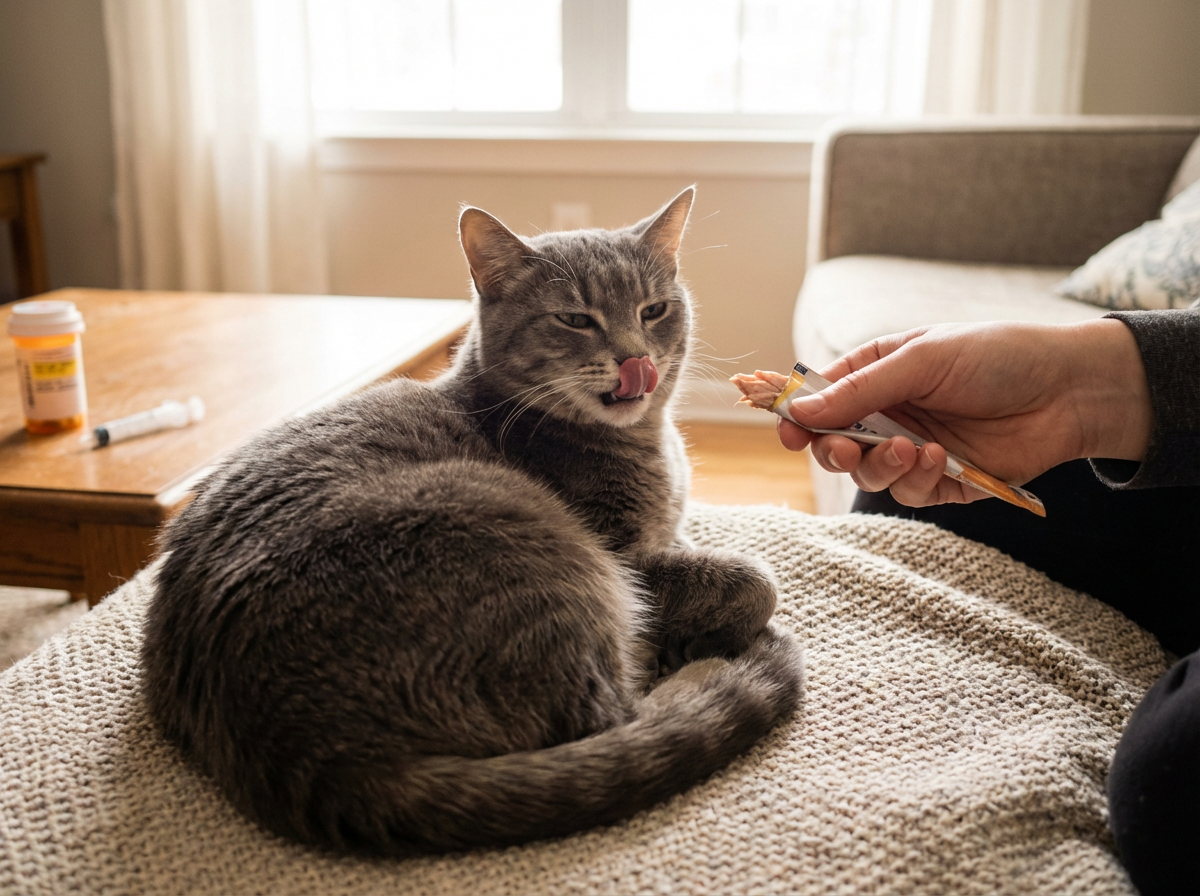
The job isn’t done once the pill is swallowed. You must monitor for:
-
Hypersalivation: Foaming at the mouth usually means they tasted the medicine. It’s not usually dangerous, but it means you need to hide the taste better next time.
-
Vomiting: If they vomit within 20 minutes, the medication was likely lost. Consult your vet.
-
Behavioral Changes: Is the cat becoming withdrawn? You may need to change the “reward” system.
Establish a Routine
Cats thrive on predictability. Try to give the medication at the same time every day, in the same location, followed by the same high-value reward. This turns the event into a “trick for a treat” rather than a traumatic event.
Frequently Asked Questions
How do I know if my cat has swallowed the medication? The most reliable sign is the “nose lick.” Cats almost always lick their nose immediately after swallowing. If they are holding it in their mouth, they will look stiff and refuse to lick.
What if my cat spits the pill out 10 minutes later? This is common. It means the pill didn’t go far enough back or wasn’t followed by water. Try using a “pill popper” (a plastic wand) to place it more accurately.
Can I crush the pill and put it in their food? Ask your vet first. Some pills are “sustained release” or have a protective coating. Crushing them can cause the full dose to hit the cat’s system at once, which can be toxic.
My cat is hiding whenever I move—what do I do? You have created a “medication association.” Stop the treatments for one dose (with vet approval) and spend that time just giving treats and affection in the “medication spot” to break the negative association.
What should I do if I miss a dose? Never double up. If you are close to the next dose time, skip the missed one. If you are unsure, consult cat health tips or call your clinic.
Conclusion
Mastering medication administration tips for cats is a journey of patience. By focusing on safety—such as avoiding dry pilling and using the side-pouch method for liquids—you protect your cat from secondary injuries. Remember to always reward your cat profusely after every session. Even the grumpiest cat can be “bought” with the right high-quality treat.
For more information on feline wellness and maintenance, check out our sections on cat grooming and how to tell if your cat is sick.
How to Pill a Cat – International Cat Care
This external resource provides a deep dive into feline behavior during pilling and is a global standard for cat owners.